

Delhi's manufacturing scene is intense. From Okhla Industrial Area to Bawana, Naraina, and Lawrence Road, businesses are under constant pressure to produce more, reduce waste, and deliver consistently packed products to retailers and distributors. The ones growing fastest have one thing in common. They automated packaging early.
Why Delhi Businesses Are Rushing to Automate Packaging
Picture a namkeen manufacturer in West Delhi running three semi-automatic machines with four operators per shift. Seal quality is inconsistent. Film wastage is high. Output barely touches 500 pouches an hour. After switching to a fully automatic VFFS setup, the same business was running 2,500 pouches an hour with one operator and near-zero seal rejections.
That's not an exceptional case. In my experience visiting production units across Delhi NCR, this kind of transformation happens regularly once a business makes the right machine investment.
The demand side is pushing things further too. Quick-commerce platforms, modern retail chains, and institutional buyers now have strict packaging standards. Tamper-evident seals, accurate fill weights, consistent pouch dimensions. If your packaging doesn't meet these standards, your product doesn't stay on the shelf.
A 2023 report by the Packaging Industry Association of India noted that over 65% of small and mid-sized FMCG manufacturers plan to upgrade to fully automatic packaging within three years. The shift is already happening. The question is whether you're ahead of it or behind it.
What Is a Pouch Packing Machine and How Does It Actually Work?
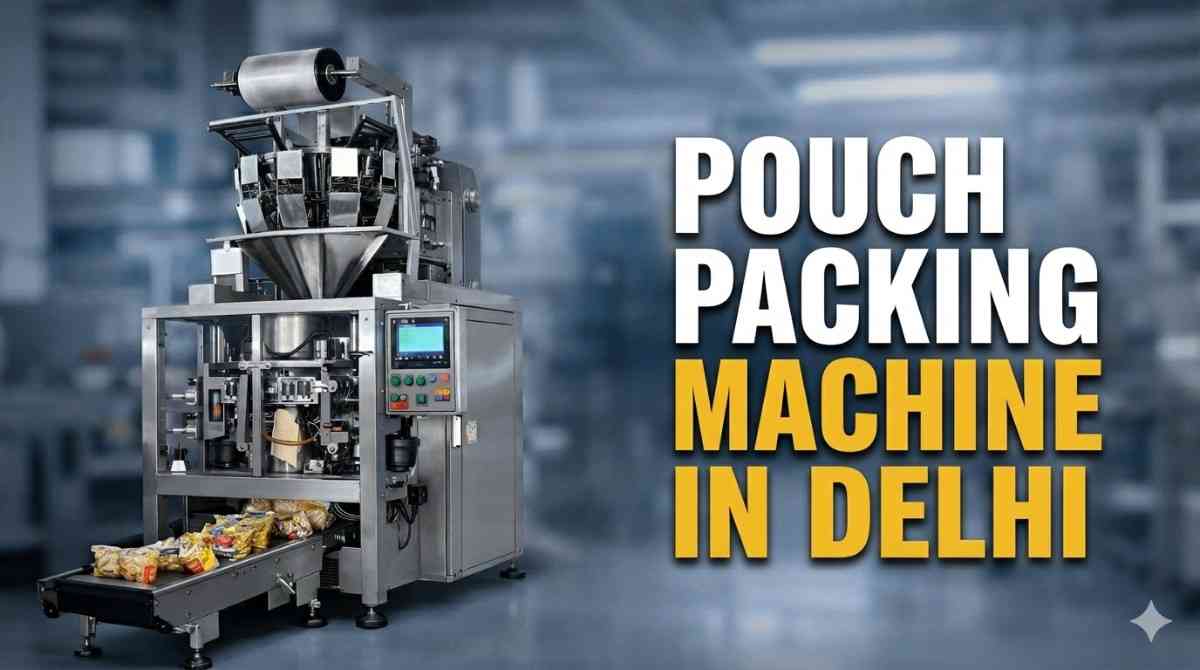
A pouch packing machine takes a roll of flexible film, forms it into a pouch, fills it with your product, seals it shut, and cuts it for discharge. All in one continuous or intermittent cycle. The most widely used format in India is the Vertical Form Fill Seal (VFFS) machine, which does all of this vertically and at high speed.
Here's the basic sequence:
- A roll of packaging film feeds into the machine from the top
- The film wraps around a forming collar and becomes a tube
- A vertical seal runs down the side of the tube
- The bottom horizontal seal closes the pouch
- Product is dispensed into the open pouch from above
- The top horizontal seal closes and the filled pouch is cut and released
This cycle can repeat anywhere from 20 to 100 times per minute depending on your product type, fill weight, and machine model. For snacks and granular products, a multihead weigher sits above the machine to dispense exact gram weights into each pouch. For powders like spices or protein supplements, an auger filler handles the dispensing.
When I first saw a VFFS machine running live during a facility visit, I honestly expected it to be complicated to operate. What stood out was how simple the touchscreen interface was. Operators were switching between product recipes in under two minutes.
Types of Pouch Packing Machines Available in Delhi
The Delhi and NCR market has access to a full range of packaging machine types. Knowing which one suits your product saves you from a costly mismatch.
Intermittent Motion VFFS Machines
The machine briefly pauses during the sealing cycle, which gives cleaner seals and better fill accuracy. This is the go-to choice for snacks, spices, pulses, dry fruits, and similar products where seal quality matters as much as speed.
Continuous Motion VFFS Machines
The film and pouch move continuously without stopping. These machines are built for high-volume operations where throughput is the priority. Sachets, stick packs, and similar small-format pouches are typically run on continuous motion systems.
Duplex Packaging Systems
Two independent packaging lines working in parallel on a shared frame. If you need to run two SKUs simultaneously or want to double your output without doubling your floor space, a duplex system is worth considering.
Stick Pack Machines
Narrow, elongated single-serve pouches for sugar, spice blends, protein powders, or pharmaceutical sachets. These machines run at very high speeds and are designed for consistent small-volume fills.
Multihead Weigher Integrated Systems
For any product where gram accuracy matters, a multihead weigher mounted above the VFFS machine is standard. It distributes product across multiple buckets and combines them for the most accurate fill weight possible at high speed.
What to Look for When Buying a Pouch Packing Machine in Delhi
This is where most buyers go wrong. They focus on the headline speed number and miss the factors that actually determine long-term value.
Servo-Driven Sealing Machines with servo motors give you precise control over sealing temperature, pressure, and timing. Seals are consistent batch after batch. Film wastage drops. If a supplier is pushing pneumatically driven machines for serious production volumes, dig deeper before committing.
PLC with HMI Touchscreen A Programmable Logic Controller paired with a Human-Machine Interface means your operators can store multiple product recipes, switch formats quickly, and handle basic diagnostics without calling a technician. This directly reduces downtime.
Film Compatibility Range Your machine should handle BOPP, polyester, laminated films, and metalized films without issues. If you plan to move toward eco-friendly or compostable packaging in the future, verify compatibility upfront.
Fill Accuracy Tolerance A machine running at 80 pouches per minute with poor fill accuracy will cost you more in product giveaway than a machine at 55 pouches per minute with tight tolerances. Always ask for fill accuracy specifications and test them with your actual product during a trial.
After-Sales Service Network I've noticed that this is consistently the most underweighted factor during the buying process. Machines break down. Sealing jaws wear. Films jam. When that happens at 11 PM before a morning dispatch, you need a service team that responds fast and carries spare parts. Always ask about local service availability, technician response time, and spare parts lead times before you sign anything.
Industries in Delhi That Use Pouch Packing Machines
The range of products being packed on VFFS machines across Delhi and NCR is wider than most people expect:
- Food and Snacks: Chips, namkeens, biscuits, dry fruits, spices, flours, and breakfast cereals
- Pharmaceuticals and Nutraceuticals: Protein powders, herbal blends, supplement sachets
- FMCG and Home Care: Detergent powders, henna, hair dye sachets, washing powder
- Agri-Products: Pulses, seeds, fertilizer sachets, animal feed
- Confectionery: Candies, toffees, sugar sachets, chocolate granules
If your product flows, pours, or can be counted, there's a pouch packing format built for it.
VS PacKit: What Delhi Manufacturers Should Know
When businesses across Delhi NCR start evaluating packaging machine suppliers, VS PacKit comes up consistently. The brand runs under V.S. International, headquartered in Faridabad, which puts them practically on Delhi's doorstep for service and support.
What I find compelling about VS PacKit isn't just the product range. It's the fact that they hold two design patents and have spent over two decades developing machines specifically for Indian production conditions, Indian packaging films, and Indian product types. That kind of local optimization matters more than most buyers realize.
Their machines run in the production plants of Haldiram's, Parle, Patanjali, Bikanervala, and Cadbury. These aren't showcase installations. These are high-volume, daily-production environments where downtime is not an option.
How to Go About Finding the Right Machine for Your Business
The process is straightforward if you follow it properly.
Step 1: Define your product and format requirements. What exactly are you packing? What pouch size range? What fill weight? Do you need any special features like a zipper seal or hang hole?
Step 2: Set your production target. How many pouches per hour or per shift do you need? Work backwards from that number to shortlist machines by speed and capacity.
Step 3: Insist on a live product trial. Never commit to a packaging machine without seeing it run your actual product. When I tried sitting through a demo with just sample material instead of the real product, the results looked perfect. The real product told a very different story. A reputable manufacturer will always accommodate a proper trial.
Step 4: Evaluate the complete support package. Warranty terms, annual maintenance contract options, operator training, and spare parts availability. These are not add-ons. They are part of the true cost of owning the machine.
Step 5: Compare total value over three to five years. A slightly higher upfront investment in a better-built machine almost always delivers stronger long-term returns through lower breakdown frequency, better film efficiency, and consistent output quality.
Concluion
Getting the right pouch packing machine in Delhi is less about finding the fastest or most affordable option and more about finding the right fit for your product, your volume, and your service expectations.
The businesses that thrive long-term are the ones that treat packaging machinery as a strategic investment rather than a cost to minimize. They trial machines properly, ask hard questions about after-sales support, and choose manufacturers with a proven track record in their specific industry.
If you're beginning that search, start with manufacturers who know the Indian market inside out and have actual reference installations you can visit. That short list is not very long. VS PacKit belongs on it.