

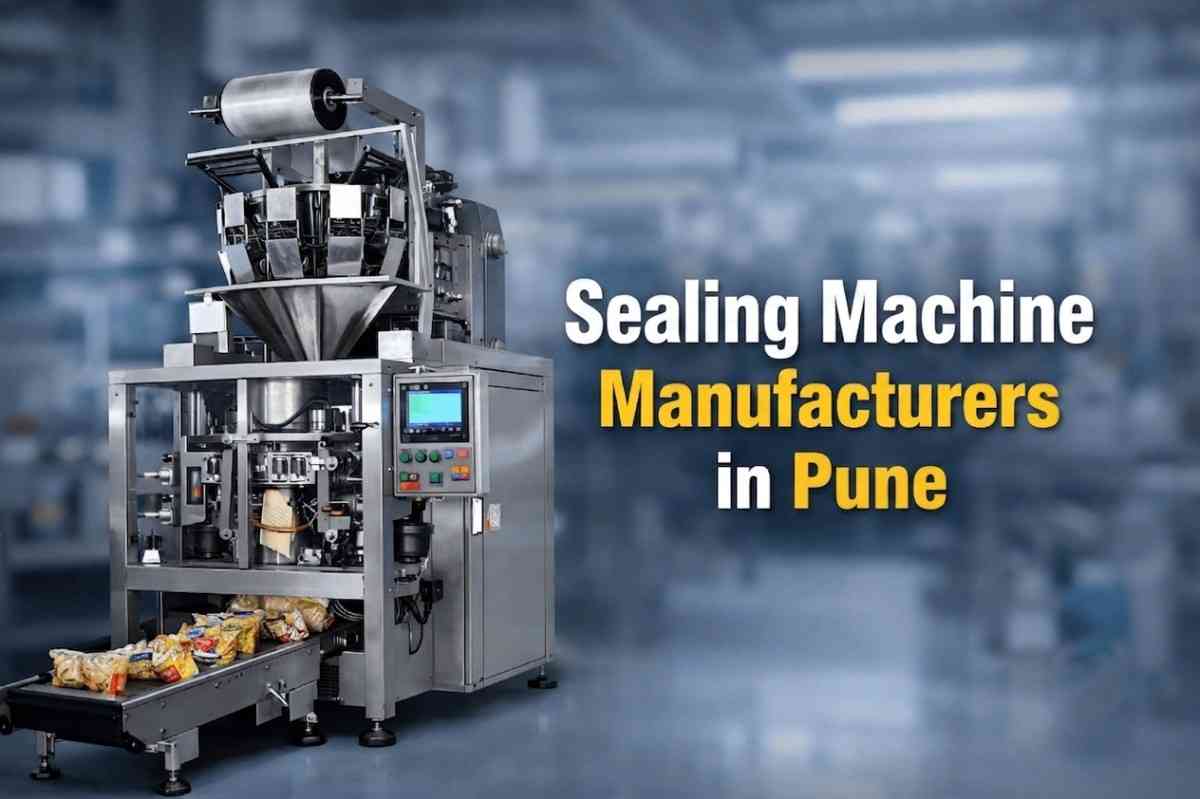
Pune is one of Maharashtra's most industrially dynamic cities. The food processing clusters in Chakan, Ranjangaon, and Pimpri-Chinchwad. The pharmaceutical and nutraceutical manufacturers concentrated across Hinjawadi and the Pune-Nashik corridor. The FMCG and agri-processing businesses distributed across Hadapsar and Bhosari. All of them share a common operational need. Sealing systems that deliver consistent, strong, tamper-evident seals at production speed, every shift, without becoming a daily source of intervention and rework.
Sealing is the final quality gate every product passes through before it reaches your customer. It is also the most common point of failure in flexible packaging lines across Pune's manufacturing base. Getting the sealing machine decision right is not a peripheral operational detail. It is a front-line commercial requirement.
Why Sealing Machine Manufacturers in Pune Deserve More Than a Quote Comparison
Here is a situation that plays out more regularly than most Pune manufacturers want to admit. A spice processing unit in Chakan was running two older pneumatic-driven VFFS machines. Seal quality was acceptable during the cooler months of the year. In summer, when ambient temperatures in the production area climbed significantly, the sealing jaws lost calibration consistency and seal rejections climbed to nearly 5 percent. One batch of turmeric powder sachets reached a modern trade distributor in Bengaluru with visibly weak top seals. The batch was returned. The account was put on a packaging quality review.
The business upgraded to a servo-driven VFFS sealing system within three months. The temperature stability problem disappeared immediately because the servo-driven closed-loop temperature control maintains precise jaw pressure and temperature independent of ambient conditions. Seal rejections dropped below 0.5 percent within the first week of operation. The distributor relationship was repaired and the account doubled its order in the following quarter.
In my experience evaluating packaging operations across Maharashtra, that pattern repeats itself regularly when businesses are running sealing systems that were never properly specified for their product and their production environment. The cost of the right machine is always lower than the cost of the wrong one when you count the rejection losses, the distributor relationship damage, and the daily operational stress over a full year.
According to a 2023 quality management survey conducted by the Maharashtra Chamber of Commerce and Industry's food and packaging division, over 58 percent of packaging-related product returns from modern trade channels in Maharashtra were attributed to sealing inconsistency rather than fill weight variance or labeling issues. That is a significant concentration of commercial risk in one specific area of the production line.
Understanding Sealing Technology in Modern Packaging Lines
Before evaluating sealing machine manufacturers in Pune, it helps to understand what sealing technology options actually exist and what each one is suited for. The right sealing system depends on your product type, your packaging film, your production speed requirement, and the seal quality standard your retail and distribution channels expect.
Heat Sealing in VFFS Machines
The most widely used sealing technology across Pune's food, pharmaceutical, and FMCG manufacturing base is the heat seal system integrated into Vertical Form Fill Seal machines. A VFFS machine forms a pouch from a roll of flexible film, fills it with product, and seals it shut in a single automated cycle.
The horizontal sealing jaws within the VFFS machine close on the film with controlled temperature, pressure, and dwell time to create a strong, consistent heat seal. Seal quality is determined by the precision of the jaw control system, the material of the sealing element, the accuracy of temperature regulation, and the consistency of jaw pressure across the full seal width.
Servo-driven sealing jaw systems are the current professional standard. Servo motors provide precise control over jaw movement, pressure, and timing that older pneumatic or cam-driven systems cannot reliably match. The result is consistent seal quality across thousands of cycles per shift regardless of film batch variations or ambient temperature changes.
Intermittent Motion Sealing
The machine pauses briefly during the sealing cycle, giving the jaws full dwell time on the film. This produces cleaner seal formation and tighter fill accuracy. The right choice for spices, pulses, dry fruits, namkeens, biscuits, and similar products where seal integrity is the primary performance priority.
Continuous Motion Sealing
The film and pouch move continuously without stopping. Designed for high-volume operations where throughput is the primary priority over marginal seal quality improvements. Stick packs, single-serve sachets, and small-format pouches for institutional supply are typically run on continuous motion sealing systems.
Ultrasonic Sealing
Uses high-frequency vibration to generate localized heat at the film interface. Particularly relevant for products that contaminate the seal area during filling, such as fine powders or liquids, because ultrasonic energy can seal through minor contamination that would compromise a standard heat seal. Increasingly relevant for pharmaceutical powder sachet applications across Pune's growing health and nutraceutical sector.
What to Actually Evaluate When Comparing Sealing Machine Manufacturers in Pune
This is the section where most buying decisions succeed or fail. Buyers who invest time in a rigorous evaluation consistently make decisions they are satisfied with years later. Buyers who shortcut the process often spend those years managing sealing problems that were entirely avoidable.
Servo Drive Specification as a Non-Negotiable Baseline For any serious production application, a sealing machine with servo-driven jaw control is the baseline requirement, not a premium upgrade. Ask specifically about the servo motor brand and specification. Ask about the control accuracy and the temperature regulation precision at the sealing jaw. These are the technical details that determine real-world seal quality consistency in ways that general marketing claims never capture.
Sealing Jaw Material and Heating Element Quality The sealing jaw material determines how evenly heat is distributed across the full seal width and how long the jaws maintain their dimensional accuracy before requiring replacement. Solid aluminum alloy jaws with embedded cartridge heaters are the professional standard. Ask about the expected jaw service life under your specific production volume and film type.
Temperature Regulation Accuracy Specification Ask for the specific temperature control accuracy specification for any machine you are evaluating. Professional-grade sealing machines maintain jaw temperature within plus or minus two to three degrees Celsius of the set point. Machines with looser temperature control will produce seal quality that varies across a production run and between shifts, particularly in production environments with variable ambient conditions like Pune's seasonal temperature range.
Film Compatibility Range Your sealing machine needs to handle the films your products require now and the films you might move toward as your product range and sustainability commitments evolve. Confirm compatibility with BOPP, polyester, laminated structures, metalized films, and co-extruded films. If you plan to adopt compostable or biodegradable films in the future, raise this requirement during the evaluation.
After-Sales Service Infrastructure for Pune I've noticed across many years of evaluating packaging machinery that this factor is consistently underweighted by Pune buyers during the purchase process and consistently overweighted in conversations about what went wrong after. Ask specifically: How quickly can a service technician physically reach my Pune facility? Are critical spare parts and sealing jaw replacements stocked in Maharashtra? What does the warranty cover in precise terms and what is excluded? Get written answers to every one of these questions before you sign anything.
Reference Installations in Your Product Category Ask for specific contact names and direct phone numbers at businesses currently running the same sealing machine model you are considering. Call them. Ask about real-world seal quality consistency over time, how the manufacturer responded to service needs, spare parts availability, and whether they would make the same buying decision again.
Live Product Trial With Your Actual Film and Product Any sealing machine manufacturer worth shortlisting will run your actual product on their machine before you commit. Bring your own packaging film. Bring your own product. Watch the machine run for at least 30 to 45 continuous minutes. Evaluate seal quality across multiple samples taken throughout the trial run. Check for consistent seal width, absence of channels or bubbles, and seal strength through a basic pull test. When I tried running the same laminated film on two shortlisted machines during an evaluation visit, the seal edge quality difference between the two was visible within the first 15 pouches. One machine's seals showed minor but consistent wrinkling at the vertical-to-horizontal seal junction. The other was clean across the full sample. The specification sheets had listed almost identical sealing jaw temperatures and dwell times. The actual seal quality told a completely different story.
Types of Sealing Machines Available for Pune Manufacturers
Understanding the full range of options helps you shortlist more effectively and ask better questions during vendor conversations.
VFFS Machines with Integrated Sealing Systems
The primary choice for most Pune manufacturers running automated production lines. Form, fill, and seal in a single integrated cycle optimized for your specific pouch format and film type.
Auger Filler Integrated Sealing Systems
For powder products including spices, pharmaceutical formulations, protein supplements, detergents, and nutraceuticals, an auger filler above the VFFS sealing system is the standard professional configuration across Pune's manufacturing base.
Multihead Weigher Integrated Sealing Systems
For snacks, dry fruits, and granular products where gram-level fill accuracy is critical, a multihead weigher combined with a VFFS sealing system delivers the throughput and accuracy that Pune's most demanding food manufacturers require.
Stick Pack and Sachet Sealing Machines
For pharmaceutical powders, sugar sticks, spice sachets, ORS packets, and nutraceutical blends in single-serve formats. Seal quality in stick pack format is particularly visible because the high surface-area-to-volume ratio makes any seal inconsistency immediately apparent to the end consumer.
Duplex Sealing Systems
Two parallel sealing lines in a single integrated machine footprint. The right solution for Pune businesses that need to run two different products or pack formats simultaneously without doubling floor space or operator requirements.
Industries in Pune That Depend on Reliable Sealing Machines
Pune's diverse industrial base generates sealing machine demand from a wide range of sectors:
- Food and Snacks: Chips, namkeens, biscuits, dry fruits, breakfast cereals, cookies, farsan, and extruded snacks
- Spices and Condiments: Ground spices, masala blends, salt, sugar, cooking pastes, seasoning mixes, and chaat masala
- Pharmaceuticals and Nutraceuticals: Powder sachets, ORS packets, protein blends, herbal formulations, vitamin sachets, and supplement mixes
- FMCG and Home Care: Detergent powders, dishwash powders, henna, hair dye sachets, and washing powder
- Agri and Animal Feed: Pulses, seeds, fertilizer blends, veterinary supplement sachets, and poultry feed concentrates
- Dairy and Beverages: Milk powder, whey protein, instant tea premix, coffee sachets, and flavored drink powders
If your product is packed in a flexible pouch or sachet, the sealing system is the single most important quality determinant in your packaging line. Every other element of packaging quality can be excellent and still be undermined by a seal that does not perform consistently.
Why Pune Manufacturers Source Sealing Machines from Faridabad Specialists
This question comes up regularly and deserves a direct answer. Pune has local machinery suppliers. But many of Pune's most technically demanding food, pharmaceutical, and FMCG manufacturers source their primary VFFS sealing systems from manufacturers based in Faridabad, Coimbatore, or Hyderabad. The reason is straightforward.
India's most technically advanced packaging sealing machine manufacturers tend to be concentrated in specific industrial clusters that have built genuine engineering depth over decades. The Faridabad manufacturing corridor is one of those clusters. Deep engineering talent, rich component supply networks, and two decades of accumulated production experience in VFFS technology shape the quality of machines built there in ways that are difficult to replicate in less specialized manufacturing environments.
VS PacKit, operating under V.S. International from its DLF Industrial Area facility in Faridabad, is a manufacturer that Pune businesses regularly reach out to for exactly this reason. Their sealing systems run in the production facilities of Haldiram's, Parle, Patanjali, Cadbury, Bikanervala, and Adani. These are high-volume environments where sealing quality is checked against rigorous standards and machines that underperform get replaced quickly.
For a Pune buyer, VS PacKit's explicit service coverage of Maharashtra means you get the engineering quality of a Faridabad specialist backed by a service model structured for your region. That combination is worth understanding in detail before you finalize your evaluation shortlist.
A Step-by-Step Buying Process That Works
The following sequence works consistently well for sealing machine procurement across Pune's manufacturing base.
Step 1: Document your sealing requirements precisely before contacting any vendor. Film type, pouch format, fill weight range, required output per shift, product type, and any specific seal quality standards for your retail or distribution environment.
Step 2: Shortlist three to five manufacturers based on verified installations in your product category. Use reference client conversations and facility visits to build this list, not catalogue quality or website ranking.
Step 3: Visit at least two shortlisted manufacturing facilities in person. Walk the production floor. Assess sealing system build quality on machines currently being manufactured. Talk to the engineering and after-sales service teams separately.
Step 4: Run a live sealing trial with your actual packaging film and your actual product. Collect seal quality samples across the full trial run. Test seal integrity through visual inspection, pull testing, and drop testing. Compare results systematically.
Step 5: Contact reference clients directly. Ask specifically about seal quality consistency over time, service response quality during urgent calls, and whether they would make the same buying decision again.
Step 6: Calculate total cost of ownership across five years. Include installation, commissioning, operator training, sealing jaw replacement cycles, annual maintenance contract, and service call costs alongside the machine cost.
Closing Thoughts
Sealing machine manufacturers in Pune range from genuinely excellent to seriously disappointing, and the gap between them is not always visible from a catalogue comparison or a showroom demonstration. It becomes visible on the production floor, in seal rejection rates, in service response times, and in the quality of support you receive when something goes wrong.
The sealing system is not a background component of your packaging line. It is the quality gate your product passes through before it reaches your customers. It deserves the time and rigor of a proper evaluation process that covers technology specifications, reference client conversations, live product trials, and honest total cost of ownership analysis.
Manufacturers like VS PacKit have earned their position in conversations about serious packaging machinery across India through two decades of consistent performance in demanding production environments. Their track record is verifiable, their reference list is accessible, and their service model for Maharashtra is documented. That combination of factors makes them worth a detailed, unhurried look as part of any serious evaluation process.