

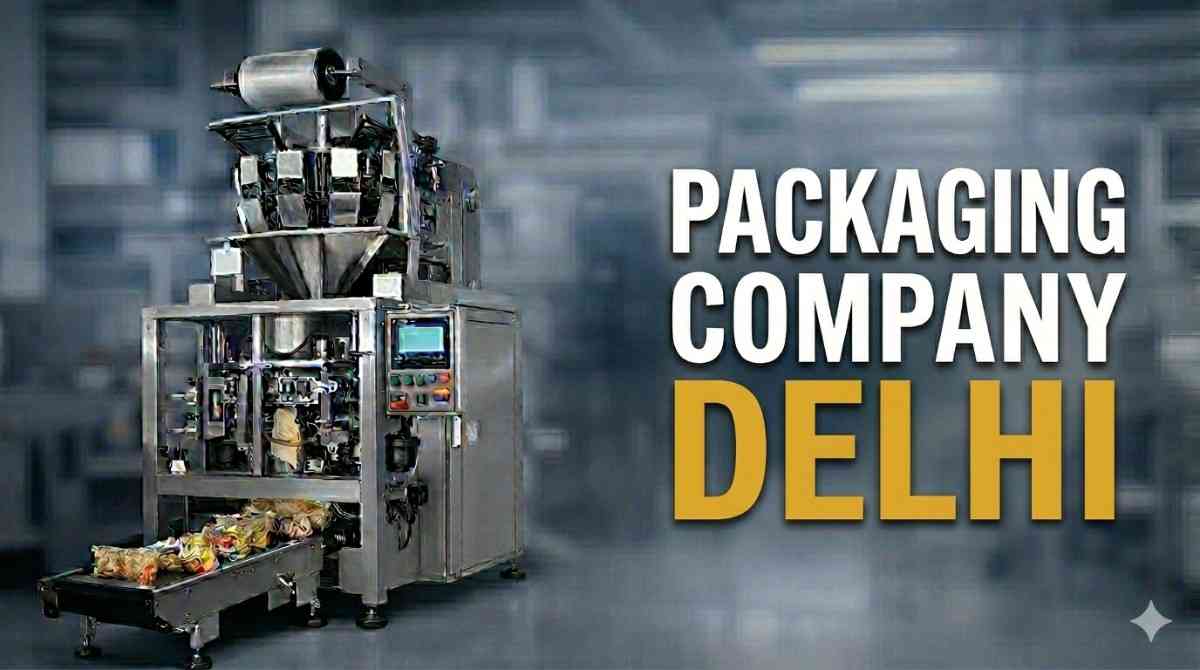
Delhi is one of the most active manufacturing and distribution hubs in all of India. From Okhla and Naraina to Bawana, Mayapuri, and Lawrence Road, the city's industrial zones are packed with food processors, FMCG manufacturers, pharmaceutical units, and agri-businesses that all share one common operational requirement. Packaging that works consistently, at speed, and without constant intervention.
The market for packaging machinery in Delhi NCR is mature and competitive. That is good news because it means you have real options. It also means you need a clear evaluation framework so you don't end up with a machine that looked great in the showroom and disappoints on the production floor.
Why Choosing the Right Packaging Company in Delhi Is a Business-Critical Decision
Think of your packaging line the way you think of your most important piece of production equipment. When it runs well, you barely notice it. When it doesn't, everything downstream breaks down. Orders get delayed. Retailers complain about seal quality. Customers return products with damaged pouches. Your quality team spends hours on rework instead of oversight.
A spice manufacturer in East Delhi once shared something that stuck with me. They had been running three semi-automatic machines with five operators across two shifts. Film wastage was running high. Seal consistency was poor enough that one of their key modern trade accounts had issued a warning about packaging quality. Within three months of switching to a properly specified VFFS line with an integrated auger filler, their wastage dropped by over 60% and that retail account not only stayed but expanded the order.
That is the real value proposition of getting your packaging right. It is not just operational efficiency. It is commercial credibility.
According to the Packaging Machinery Manufacturers Association of India's 2023 industry outlook, Delhi NCR accounts for approximately 18% of total packaging machinery demand in India, making it one of the single largest regional markets in the country. The businesses driving that demand are not replacing machines for the sake of it. They are responding to rising retailer standards, tighter fill weight regulations, and consumer expectations around pack presentation and tamper evidence.
Understanding What a Full-Service Packaging Company Actually Provides
Before you start shortlisting vendors, it helps to understand what a genuinely capable packaging company in Delhi should be able to offer. The best ones are not just machine sellers. They are solution providers who understand your product, your production environment, and your downstream requirements.
Vertical Form Fill Seal Machines
The VFFS machine is the backbone of most automated packaging lines. It takes a roll of flexible film, forms it into a tube using a collar, runs a vertical seal down the side, creates a bottom horizontal seal, fills the pouch with your product from above, seals the top, and cuts the finished pouch for discharge. The whole cycle happens anywhere from 20 to 100 times per minute depending on the machine model, your product type, and your target fill weight.
Modern VFFS machines from quality manufacturers feature servo-driven sealing systems for precise seal control, PLC automation for reliable and repeatable cycle management, and touchscreen HMI interfaces that allow operators to store multiple product recipes and manage format changeovers without needing technical support every time.
Auger Filler Systems
For powder products like spices, protein supplements, pharmaceutical powders, detergent, and henna, the auger filler is the standard dispensing technology. A rotating screw dispenses controlled volumes of powder into each pouch with fill accuracy typically within plus or minus one percent of target weight when the system is properly calibrated.
Multihead Weigher Systems
For snacks, dry fruits, frozen foods, and any granular product where gram-level fill accuracy directly affects your cost per pack, a multihead weigher integrated above the VFFS machine is the professional standard. It distributes product across multiple radial buckets, calculates combinations that hit the target weight, and releases the right combination into each pouch at high speed. The accuracy and throughput of this system cannot be matched by any single-head or manual approach.
Stick Pack and Sachet Machines
Single-serve formats for sugar, spice sticks, ORS sachets, pharmaceutical powders, and instant drink mixes. Stick pack machines run at high cycle speeds and produce narrow, clean pouches well suited to both retail display and institutional supply. Several Delhi-based businesses in the pharma and food service sectors run these formats extensively.
Duplex Packaging Systems
Two independent packaging lines working in parallel within a single integrated machine setup. For businesses that need to run two different SKUs simultaneously or want to double output without doubling floor space and operator headcount, a duplex system delivers exactly that.
Key Factors to Evaluate When Shortlisting a Packaging Company in Delhi
This section matters more than any other part of this guide. Getting the evaluation right upfront saves you from a very expensive mistake downstream.
1. Verified Industry Experience in Your Product Category Not general packaging experience. Specific experience with your product type. A machine that excels at packing potato chips needs different configuration than one built for pharmaceutical powder sachets. Ask for reference installations specifically in your product category and verify them before you proceed.
2. Machine Technology and Component Quality Go beyond the headline speed specifications. Ask about the servo motor brand, the PLC manufacturer, the sealing jaw material and heating element type, the film tracking system design, and the HMI software quality. These components determine how reliably the machine performs over years of continuous operation, not just during the factory demonstration.
3. Design Patents and Engineering Innovation I've noticed that packaging companies that hold design patents approach machine development with a fundamentally different level of seriousness than those that assemble standard components. Patents signal that the manufacturer has solved engineering problems in original ways, which usually translates into fewer chronic reliability issues on the production floor.
4. After-Sales Service Network and Response Time This is the factor that most buyers underweight during the buying process and most regret later. Ask directly: How quickly can a service technician reach my facility in Delhi? Are spare parts stocked locally or shipped from your manufacturing location? What does your warranty actually cover and what is specifically excluded? Get answers to all of these in writing before you sign anything.
5. Client References You Can Actually Contact Not a list of brand logos on a website. Specific contacts at companies running the same machine model you are evaluating. Call them. Ask about downtime frequency, service response quality, and whether they would buy from the same manufacturer again. This conversation is consistently the most valuable thing you can do during a packaging machine evaluation.
6. Live Product Trial Availability Any credible packaging company will accommodate a trial run using your actual product and your actual packaging film before you commit. When I tried evaluating two machines that looked nearly identical on paper, the trial with real product revealed performance differences that no spec sheet comparison would ever have shown. If a vendor is reluctant to do a proper trial, take that reluctance seriously.
Industries Across Delhi That Rely on Automated Packaging Solutions
The range of industries sourcing packaging machinery across Delhi and NCR is wide and growing:
- Food and Snacks: Chips, namkeens, biscuits, dry fruits, breakfast cereals, cookies, and extruded snacks
- Spices and Condiments: Ground spices, masala blends, salt, sugar, cooking pastes, and seasoning mixes
- Pharmaceuticals and Nutraceuticals: Powder sachets, ORS packets, protein blends, herbal supplements, and vitamin sachets
- FMCG and Home Care: Detergent powders, dishwash powders, henna, hair dye, and washing powder
- Agri and Animal Feed: Pulses, seeds, feed concentrates, and fertilizer blends
- Dairy and Beverages: Milk powder, whey protein, instant tea, coffee premix, and flavored drink sachets
If your product pours, flows, or can be counted into a pouch, there is a VFFS-based packaging format specifically designed for it. The key is working with a manufacturer who understands your product's behavior inside a packaging machine rather than just selling you the machine with the highest speed rating.
VS PacKit: What Delhi Manufacturers Should Know
When serious packaging buyers across Delhi NCR start building their shortlist, VS PacKit consistently comes up as one of the names worth evaluating. Operating under V.S. International from its manufacturing facility in the DLF Industrial Area in Faridabad, the company is practically on Delhi's doorstep. For NCR-based clients, this proximity translates directly into faster service response times, simpler spare parts logistics, and easier coordination for machine trials and facility visits.
What makes VS PacKit worth a serious look is not just the proximity. It is a combination of factors that matter for long-term machine ownership. Over two decades of VFFS machine manufacturing experience. A portfolio of design patents reflecting genuine engineering investment. A product range that covers VFFS machines in multiple formats, integrated filler systems, duplex packaging lines, stick pack machines, and multihead weigher systems. And a client reference list that includes Haldiram's, Parle, Patanjali, Cadbury, Bikanervala, and Adani.
Those are not showcase installations. Those are high-volume daily production environments where packaging machine reliability is a non-negotiable operational requirement. For a Delhi buyer, that reference base means you can visit actual production sites, talk to actual production managers, and verify real-world performance before you commit.
In my experience, the companies that make it onto the reference lists of businesses like Haldiram's and Parle have earned that position through performance over years, not through marketing. That kind of validation carries real weight.
A Practical Buying Process That Actually Works
If you want to get from initial search to the right machine without wasting months going in circles, here is the sequence that works consistently for packaging machinery procurement in the Delhi market.
Step 1: Document your requirements before you contact any vendor. Product type, fill weight range, target output per shift, pouch format and dimensions, packaging film material, and any specific regulatory or retail requirements. The more precisely you define your requirements upfront, the more useful every subsequent vendor conversation will be.
Step 2: Shortlist three to five manufacturers based on verified industry experience. Use client references and site visits to shortlist, not brochures or search results. Call the reference clients. Ask for permission to visit their facilities and see the machines running.
Step 3: Visit shortlisted manufacturers in person. Walk the production floor. Evaluate build quality on machines currently being manufactured. Talk to the engineering and service teams directly. Ask about their R and D process and their approach to machine reliability.
Step 4: Run a live product trial with your own product and film. Bring everything needed for a realistic production trial. Evaluate seal quality on multiple samples, fill weight accuracy across a sustained run, changeover time between formats, and overall machine stability during the trial period.
Step 5: Contact reference clients and have honest conversations. Ask specifically about downtime frequency, what went wrong in the first year of operation, how the manufacturer's service team responded, and whether they would make the same buying decision again.
Step 6: Evaluate total cost of ownership over five years. Add installation, commissioning, operator training, annual maintenance contract, expected spare parts costs, and service call costs to the machine cost. The machine with the lowest initial cost is frequently not the most economical option over a realistic operational horizon.
Closing Thoughts
Delhi's packaging machinery market gives you genuine options. There are capable manufacturers serving this market and there are vendors who are very good at looking capable without fully delivering. The difference between them is not always obvious from a brochure or a website.
The businesses that consistently make the right packaging machine decision are the ones that do the work during the evaluation process. They visit facilities. They run real product trials. They talk to real customers. They look beyond the initial quote to understand the full cost of ownership and the quality of support they will receive after the machine is installed.
A packaging company in Delhi or serving Delhi that is genuinely worth your business will welcome every one of those evaluation steps. They will have nothing to hide because their machines and their service record speak clearly.
VS PacKit belongs in that conversation. So do one or two others worth evaluating seriously. Do the work, make the visit, run the trial, and make your decision based on evidence rather than sales confidence.