

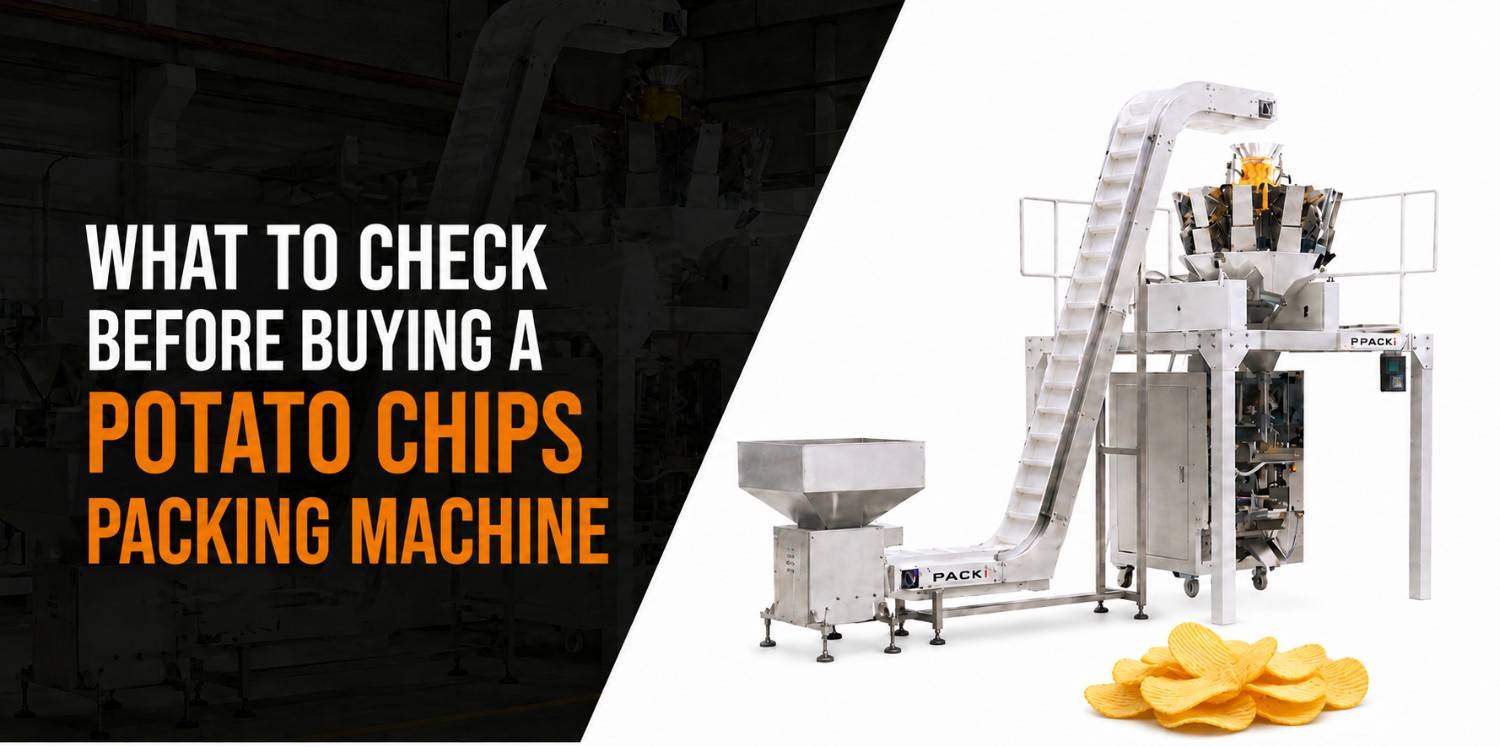
So you have perfected your chips recipe. The flavor is right, the crunch is exactly what your customers want, and demand is growing faster than your current packing setup can handle. Now comes the next big step: investing in a potato chips packing machine that can actually keep up with your ambitions.
But here is where many food businesses make a costly mistake. They focus entirely on output speed or go with the first quote they receive, without checking the details that actually determine whether the machine will serve them well for years or become a maintenance headache within months.
This guide is designed to help you avoid exactly that. Whether you are a startup entering the chips market or an established snack manufacturer looking to upgrade, here is a practical, honest breakdown of what to check before you sign anything.
Start With Your Product, Not the Machine
This might sound counterintuitive, but the smartest buyers start by understanding their product deeply before even looking at machine specifications.
Potato chips are one of the most challenging products to pack mechanically. They are fragile, irregularly shaped, light in weight, and highly sensitive to moisture and oxygen. A machine that handles namkeen well might crack your chips during the filling process. A sealing system calibrated for denser products might not create the airtight seal your chips need to stay crispy.
Before approaching any manufacturer, get clear answers to these questions about your product.
What is the average fill weight of your packs? Common retail packs range from 20g to 200g. Your machine needs to be accurate at your specific target weights.
What packaging film do you use or plan to use? Chips are typically packed in metalized polyester or multilayer laminated films that require precise sealing temperatures.
Do you need nitrogen flushing? Most chips brands use modified atmosphere packaging, which involves replacing oxygen inside the pouch with nitrogen to extend shelf life and protect crunch. Not all machines support this as a standard feature.
Answering these three questions alone will significantly narrow your options and help you have a much more productive conversation with any potato chips packing machine manufacturer.
Understanding the Technology Behind Chips Packaging
The most widely used system for packing potato chips at scale is the VFFS machine, which stands for Vertical Form Fill Seal. It is the same technology used for namkeen, extruded snacks, coffee, spices, and a wide range of other food products, but the configuration for chips has some specific requirements.
How the VFFS Machine Works for Chips
A reel of flat packaging film is threaded into the machine. As it moves vertically downward, a forming collar shapes it into a tube. The tube is sealed lengthwise to form the back seal of the pouch. Chips are fed into the tube from above through a weighing and dispensing system. The bottom of the pouch is sealed first, then the top is sealed and cut to complete the pack.
The entire cycle takes a fraction of a second and repeats continuously. A well-configured VFFS machine for chips can produce a high volume of packs per minute, making it the backbone of any serious chips production line.
Why the Multihead Weigher Matters
Chips are light, irregular, and fragile. A multihead weigher is the filling system of choice for this product. It uses multiple vibrating buckets arranged in a radial pattern, each equipped with a digital load cell. The machine calculates which combination of buckets adds up to the target weight and releases those portions simultaneously into the VFFS machine below.
This system achieves high accuracy without handling the product roughly. The buckets are typically coated or lined to reduce breakage during the weighing process, which is critical for maintaining the quality of your chips.
If a supplier quotes you a chips packaging solution without a proper multihead weigher, that is a serious flag worth questioning.
The Nitrogen Flushing Question Every Chips Manufacturer Must Ask
If you plan to compete in modern retail, quick commerce, or export markets, nitrogen flushing is not optional. It is expected.
Nitrogen flushing involves injecting food-grade nitrogen into the pouch just before sealing to displace oxygen. Oxygen is what causes chips to go stale, turn soft, and develop off-flavors. Nitrogen flushing significantly extends shelf life and is one of the key reasons branded chips pouches feel puffed when you pick them up.
When evaluating a potato chips packing machine, ask the manufacturer specifically whether the machine supports modified atmosphere packaging and how the nitrogen injection is integrated into the sealing cycle. Ask for the residual oxygen percentage the machine can achieve, as this is a measurable performance indicator.
This is a detail that separates machines built for the chips industry from generic automatic packaging machines that have simply been adapted.
Step-by-Step: What to Check During a Machine Evaluation
Evaluating a potato chips packing machine is a process, not a single visit. Here is a step-by-step approach that experienced buyers follow.
Step 1: Request a Live Product Trial
Do not accept a demonstration with substitute products. Request a trial using your actual chips, your actual film, and your target fill weights. This is the only way to assess real sealing quality, fill accuracy, product breakage levels, and machine consistency.
Step 2: Check the Sealing System in Detail
Chips packaging films are sensitive. Examine the seal jaw design. Are they flat or profiled? What is the temperature range? Does the machine support independent control of the top and bottom seal temperatures? Poor sealing means oxygen entering the pack, which directly impacts your product quality and shelf life.
Step 3: Assess Film Registration and Print Accuracy
If your packaging film has printed artwork, the machine must align each pouch cut correctly so the print appears in the right position on every pouch. Ask the supplier how the machine handles print registration, what sensor systems are used, and how it manages film drift during long production runs.
Step 4: Evaluate Changeover Time and Ease
If you plan to run multiple pack sizes, ask how long a format changeover takes and how many mechanical adjustments are required. Machines with digital parameter storage allow operators to recall saved settings for each pack size, which dramatically reduces downtime during changeovers.
Step 5: Inspect Build Quality and Component Sourcing
Look at the frame construction, the electrical cabinet, and the components used for drives, sensors, and controls. Ask where the major components are sourced from. A machine built with quality servo drives and reputable sensors will perform more reliably over years of continuous production than one built with generic alternatives.
Step 6: Ask About After-Sales Support Specifically
Ask the manufacturer directly: what is the response time for a service call? Are spare parts available from stock or do they need to be ordered? Is remote diagnostic support available? Is there a trained service engineer in your region? These answers will tell you a great deal about the kind of partner you are dealing with.
Mistakes That Cost Chips Manufacturers Dearly
Learning from other people's mistakes is far less expensive than making your own. Here are the errors that come up most often in the chips packaging industry.
Choosing Speed Over Suitability
A machine rated at the highest pouches per minute sounds impressive. But if it handles chips roughly, causes excessive breakage, or produces inconsistent seals, the speed means nothing. Always prioritise suitability for your specific product over headline performance numbers.
Ignoring Film Compatibility
Different chips brands use different film structures. A machine that has not been validated with your specific film may produce weak seals, excessive film waste, or inconsistent pouch lengths. Always confirm film compatibility before purchase.
Skipping the Total Cost of Ownership Calculation
The purchase investment is just the beginning. Factor in energy consumption, consumable parts, maintenance frequency, and downtime risk over a three to five year period. A slightly higher initial investment in a more reliable machine often delivers better total value.
Not Planning for Growth
Buying a machine that exactly meets your current production volume leaves no room for order growth. Build in at least 20 to 30 percent capacity headroom so your packaging line can support business growth without requiring another capital investment too soon.
How VS PacKit Approaches Potato Chips Packing Machine Solutions
VS PacKit by VS International has spent over two decades building VFFS-based packaging solutions for the food and FMCG industry, including purpose-configured systems for chips and snack manufacturers across India.
Built for the Specific Demands of Chips Packaging
VS PacKit's potato chips packing machines are designed with the fragility and film sensitivity of chips in mind. Their VFFS systems support nitrogen flushing integration, servo-driven film feeding for accurate print registration, and sealing systems engineered for the laminated and metalized films used in chips packaging.
Multihead Weigher Integration
VS PacKit's complete chips packaging lines pair their VFFS machines with multihead weighers configured for gentle product handling. Coated bucket surfaces, adjustable vibration settings, and precise load cell technology ensure chips reach the pouch with minimal breakage and accurate fill weights.
Custom Configuration for Your Production Line
No two chips operations are identical. VS PacKit works with clients to configure pack size ranges, output speeds, sealing parameters, and nitrogen flushing levels based on actual production requirements. This customisation approach means you get a machine built for your specific needs rather than a generic solution.
Reliable Support Across India
With a trusted track record across Indian food manufacturers and multiple design patents to their name, VS PacKit brings the kind of after-sales commitment and technical depth that chips manufacturers need when production continuity is critical.
Final Thoughts: The Right Machine Is a Long-Term Decision
Buying a potato chips packing machine is not a transaction. It is a partnership with a manufacturer whose technology and support will directly shape your production capability for years. Taking the time to evaluate the right factors, ask the right questions, and run proper product trials is not overthinking. It is how smart food businesses protect their investment and their brand.
If you are ready to explore a chips packaging solution that is genuinely built for the demands of your product and your production environment, VS PacKit has the expertise and technology to guide you from requirement to commissioning. Reach out to their team, share your specifications, and take the first step toward a packaging line your brand can grow with.