

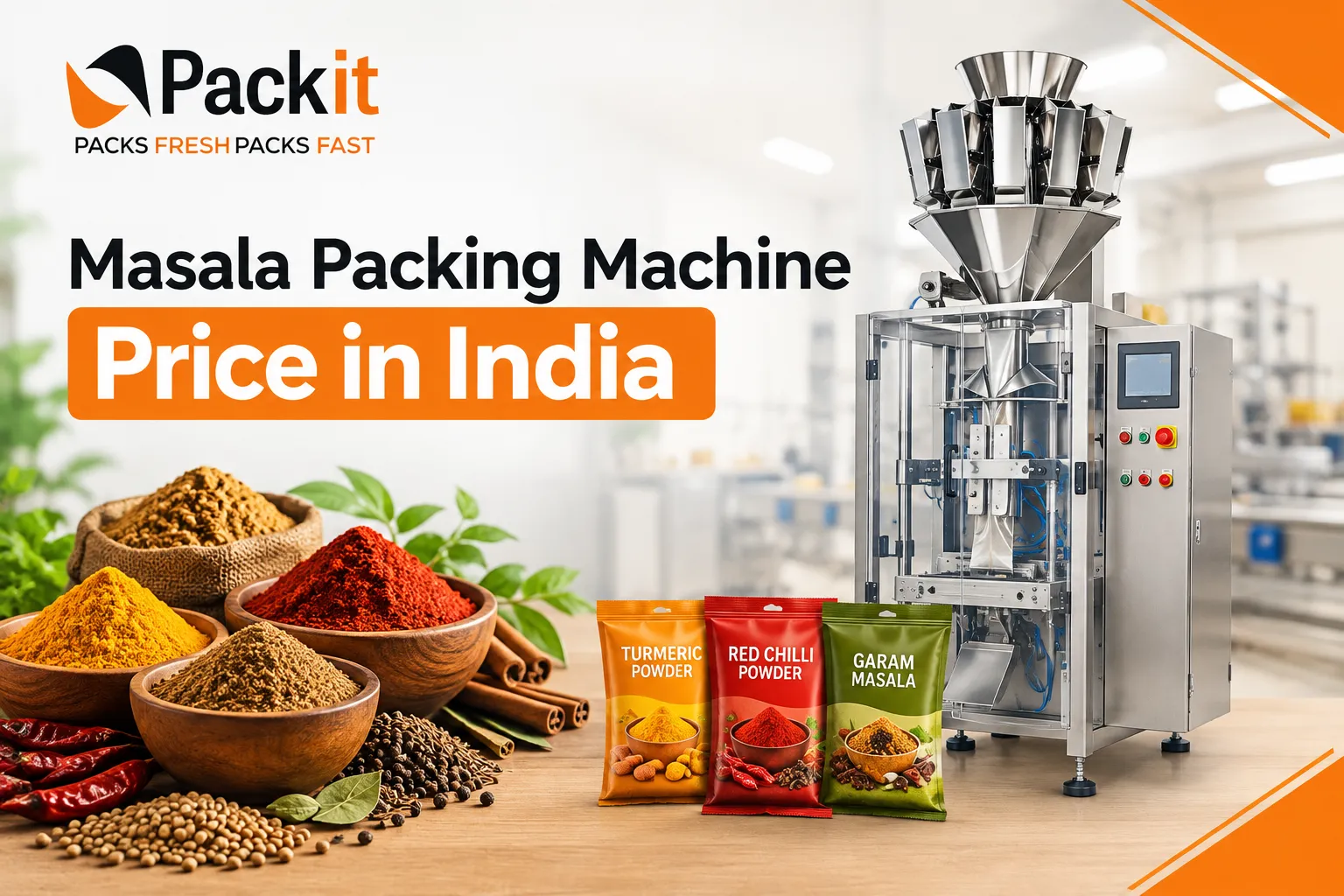
If you've started asking around for a masala packing machine price in India, you've probably noticed something frustrating already: no two quotes look alike. One supplier says ₹2 lakh, another says ₹8 lakh, and a third throws a ₹25 lakh figure at you for what sounds like the same machine. It's not that anyone's lying to you. It's that "masala packing machine" covers everything from a basic hand-operated sealer to a fully automatic multihead weigher line running 24/7 in a large spice factory.
This guide breaks down what actually drives the price, gives you a realistic price list by machine type, and walks you through what to check before you sign a purchase order. No fluff, just the numbers and details you need to make a sound decision.
Not sure which machine fits your production volume and budget?
Talk to our packaging experts and get a straight answer, not a sales pitch.
Masala Packing Machine Price List in India (2026)
Here's a realistic masala packing machine price list based on machine type and automation level. Treat these as indicative ranges. Actual quotes will vary based on speed, filler type, pouch size, and the brand you go with.
| Machine Type | Automation Level | Approx. Price Range (INR) | Typical Output |
|---|---|---|---|
| Manual pedal/hand sealer with weighing scale | Manual | ₹15,000 – ₹60,000 | Low volume, home-scale or trial batches |
| Semi-automatic pouch packing machine | Semi-automatic | ₹1.5 lakh – ₹3.5 lakh | 15–30 pouches/min |
| Collar-type auger filler (VFFS) | Fully automatic | ₹3 lakh – ₹7 lakh | 30–60 pouches/min |
| VFFS with servo auger filler | Fully automatic | ₹5 lakh – ₹10 lakh | 40–80 pouches/min |
| Multihead weigher based VFFS | Fully automatic | ₹8 lakh – ₹20 lakh | 60–120 pouches/min |
| High-speed multihead weigher line (10-14 heads) with conveyor and check weigher | Fully automatic, industrial scale | ₹15 lakh – ₹30 lakh+ | 100+ pouches/min, large factories |
A few honest notes on this table. First, GST (usually 18% on packaging machinery) and freight are typically extra, so factor that into your actual budget. Second, prices climb quickly once you add options like nitrogen flushing, date and batch coding, or a check weigher on the output side. Third, entry-level semi-automatic machines are genuinely fine for small and mid-sized masala brands just starting to move away from manual packing, so don't assume you need the most expensive option on this list.
What Actually Decides the Masala Packing Machine Price in India
Suppliers rarely explain their pricing logic clearly, which is exactly why buyers end up confused comparing quotes. Here's what really moves the number up or down.
Type of Filling System
This is the single biggest factor. A basic cup filler or auger filler is mechanically simpler and cheaper to build than a multihead weigher, which uses multiple load cells and a computer to calculate the most accurate combination of weights before every drop. Spice powders like turmeric, chilli, and garam masala are non-free-flowing, so they need auger fillers or weighers designed specifically for sticky, fine powders rather than granules or free-flowing products.
Automation Level
Manual and semi-automatic machines need an operator to load film, adjust weight, or trigger the seal cycle. Fully automatic machines handle film feeding, bag forming, filling, sealing, and cutting on their own, which naturally costs more upfront but cuts your labour cost significantly over time.
Speed and Output Capacity
A machine rated for 30 pouches per minute will cost noticeably less than one rated for 100+ pouches per minute, even if both use similar technology. If you're a small manufacturer packing a few hundred kilos a day, you don't need factory-line speed, and paying for it is a waste of capital.
Filling Accuracy and Weight Range
Machines built for tight tolerance filling (say, ±0.5g accuracy on a 100g pack) cost more than machines with looser tolerances, because they need better load cells, servo motors, and calibration. If your product is sold by declared weight under legal metrology rules, accuracy isn't optional, so don't cut corners here to save a few lakhs.
Build Quality and Material
Machines built with SS304 food-grade contact parts, proper dust collection hoods, and industrial-grade PLC controls cost more than machines using mixed mild steel and basic electronics. For a food product like masala, the contact parts really should be food-grade stainless steel, even if it adds to the price.
Brand, After-Sales Support, and Spare Parts Availability
An established manufacturer with a service network, spare parts on hand, and a track record of installations will usually price slightly higher than a small unbranded workshop. That premium often pays for itself the first time a part breaks down and you need a technician within a day, not a week.
Add-on Features
Nitrogen flushing (for extending shelf life on oil-rich masalas), date and batch coding, check weighers, metal detectors, and multi-lane configurations all add to the base price. Add only what your product genuinely needs.
Types of Masala Packing Machines and Which One Fits You
Manual and Semi-Automatic Machines
These are the entry point for small spice businesses, home-based masala brands, and units just formalising their packaging. You weigh the powder separately (or use a basic dosing cup), place the pouch manually, and the machine handles sealing. They're affordable and easy to operate but slow, and consistency depends heavily on the operator's attention.
Collar-Type Auger Filler VFFS Machines
This is the workhorse for most mid-sized masala manufacturers in India. The auger screw doses the powder by rotation count, which works well for fine, dusty spice powders that don't flow like granules. A servo-driven auger filler gives noticeably better accuracy than a basic geared motor version, which is worth the extra cost if you're packing premium blends.
Multihead Weigher Based Machines
These use multiple weighing heads working together to hit target weight faster and more accurately, and they're the standard choice for larger factories running high volumes or multiple SKUs. They cost more, but the accuracy and speed usually justify it once you cross a certain production threshold, since even small overfill percentages add up to real money over a year of production.
Masala Packing Machine Price by City in India
Machine prices don't vary hugely by geography since most are built in a handful of manufacturing hubs and shipped pan-India, but local demand, freight cost, and dealer competition do create small regional differences. If you're researching locally, these city-specific guides break down what to expect:
- Masala packing machine price in Delhi
- Masala packing machine price in Kolkata
- Masala packing machine price in Pune
- Masala packing machine price in Coimbatore
- Masala packing machine price in Ahmedabad
- Masala packing machine price in Chennai
- Masala packing machine price in Hyderabad
If your city isn't listed, that's fine too. Most manufacturers, including us, install and service machines across India regardless of where the head office is.
Automatic vs. Semi-Automatic: Which One Should You Actually Buy?
This is the question we get asked the most, and honestly, the right answer depends less on budget and more on your daily volume.
If you're packing under 500 kg a day, or you're still testing which masala blends sell well, a semi-automatic machine makes sense. You'll save capital, keep operations simple, and upgrade later once volumes justify it.
If you're already packing 500 kg to a few tonnes a day, or you're supplying to retail chains with strict weight consistency requirements, a fully automatic VFFS machine pays for itself through labour savings and reduced product giveaway (the tiny bit of extra powder operators tend to add "just to be safe" with manual weighing, which quietly eats into margins over a year).
There's no universal right answer here. A semi-automatic machine running efficiently often beats an oversized automatic line running at half capacity.
Features to Check Before You Finalise a Machine
A few things matter more than they might seem to at first glance:
- Food-grade contact parts. Anything touching the powder, the hopper, auger, and filling nozzle, should be SS304 or better. Mild steel parts can corrode and contaminate the product over time.
- Dust collection. Spice powders are fine and dusty. A machine without proper dust hoods means product loss, a messy floor, and health issues for your operators.
- PLC control with a simple interface. You want an operator to be able to change pouch size or weight settings without calling a technician every time.
- Servo motor vs. geared motor auger. Servo gives tighter weight control, which matters for legal metrology compliance and reduces overfill wastage.
- Film compatibility. Check the machine works with the laminate you plan to use (usually a metalised or transparent laminate with good seal strength for spice packaging).
- After-sales service radius. Ask where the nearest service centre or technician is. A machine that's cheap upfront but takes a week to get serviced can cost you far more in downtime.
Hidden Costs Beyond the Machine Price
Buyers often budget for the machine and forget the rest. Here's what typically adds to your actual investment:
- GST, generally 18% on packaging machinery, added to the base price.
- Freight and installation, especially for larger multihead weigher lines that need on-site assembly.
- Operator training, usually included by reputable manufacturers but worth confirming.
- Annual maintenance contracts (AMC), which can range from a few thousand to a lakh or more annually depending on machine complexity.
- Spare parts inventory, especially for wear items like sealing jaws and film rollers.
Ask for a written breakdown of all this before comparing two quotes side by side. A ₹4 lakh quote with installation and one year of free service included can work out cheaper than a ₹3.5 lakh quote that charges extra for everything after delivery.
How to Choose the Right Machine for Your Business
- Calculate your daily volume first, not the machine speed you want. Work backward from how many kilos or pouches you actually need to pack per day.
- Get at least three quotes and ask each supplier to specify exact filler type, accuracy tolerance, and what's included versus what's extra.
- Ask for a live demo or video with your actual product, since different masala blends (fine powder vs. blended with small solid pieces) behave differently in auger fillers.
- Check the manufacturer's installation base. Ask for references from businesses of a similar scale to yours, not just their biggest client.
- Don't over-buy speed. A machine running at 40% capacity all day isn't more efficient, it's just idle capital.
Why Manufacturers Like VS Packit Matter Here
We manufacture VFFS packaging machines at our facility in Faridabad, Haryana, and we've built machines specifically for spice and masala manufacturers who need consistent fill accuracy on fine, dusty powders. Whether you need a straightforward auger-filler VFFS machine or a multihead weigher setup for higher volumes, our team can walk you through the right configuration for your product and your budget, not just the most expensive option on the shelf.
Conculsion
Buying a masala packing machine is a decision that affects your production line for years, so it's worth taking the time to get the numbers right instead of chasing the lowest quote on the table. If you'd like a clear, honest recommendation based on your actual product and volume, we're happy to help you work through it.
Call us at +91 9811103573 to discuss your requirement and get a price that actually matches what you need.