
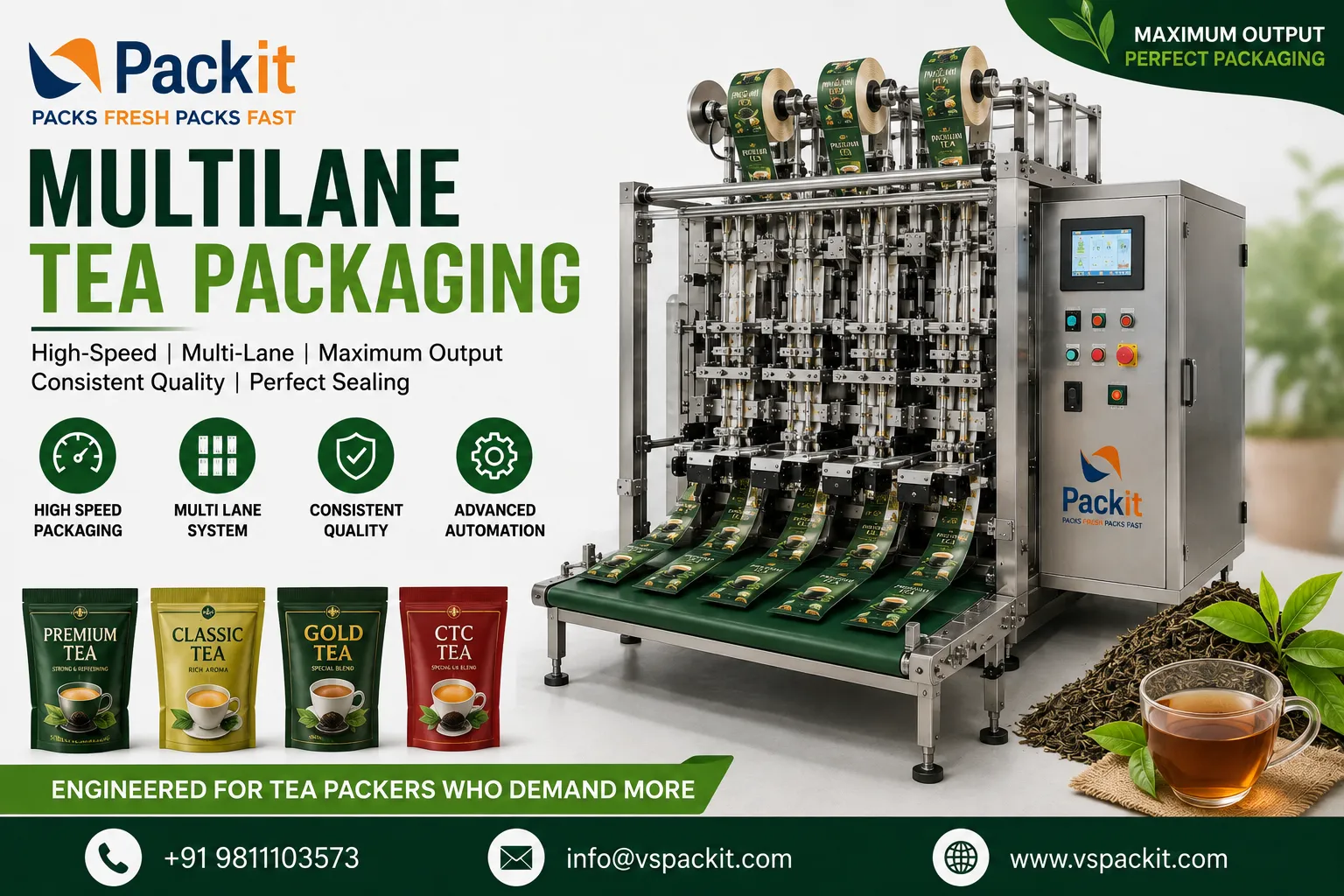
Multilane tea packaging refers to a packing process where several lanes of pouches, sachets, or bags are formed, filled, and sealed simultaneously on a single machine. Instead of one pouch at a time, you get multiple identical packs moving off the line together, which multiplies your output without multiplying your floor space or your labor headcount.
In this guide, I will walk you through how multilane tea packaging actually works, where it fits in your production line, what to check before you buy one, and the mistakes I keep seeing manufacturers make when they upgrade from single lane to multilane. This is written for people who will actually be signing a purchase order, not for casual browsers, so expect practical detail rather than marketing fluff.
What Is Multilane Tea Packaging?
Multilane tea packaging is a packing method where a single machine runs two or more parallel lanes to form, fill, and seal tea sachets or pouches at the same time, dramatically increasing output per hour compared to single lane systems.
Think of it as running several small packing machines side by side, except they share one frame, one film reel system, one control panel, and one operator. Each lane pulls film, forms a pocket, drops in a measured quantity of tea, seals it, and cuts it free, all in near perfect sync with the lanes next to it.
This is different from a standard single lane VFFS machine, which forms one continuous tube of film and produces one pouch at a time. A multilane system multiplies that same basic idea across multiple tracks running in parallel.
Where Multilane Fits Among Tea Packaging Machines
Tea packaging machinery generally falls into a few broad categories, and it helps to know where multilane sits before you decide anything.
- Single lane VFFS machines, which form one vertical tube of film and produce one pouch per cycle
- Duplex or dual lane systems, which double output by running two lanes instead of one
- True multilane machines, running four, six, or eight lanes depending on pack size and output target
- Pyramid or 3D bag machines, often built as multilane units specifically for filter tea bags with tag and thread
If your factory is currently running a single lane or duplex setup and you are hitting a ceiling on daily output, multilane is usually the next logical step rather than buying a second full machine.
How Multilane Tea Packaging Machines Work
The working principle is simpler than it looks once you break it into stages. From working with packaging lines across food and FMCG categories, I have found that most buyers overestimate the complexity and underestimate how much the film handling matters.
Step by Step Process
- Film unwinding. A wide roll of packaging film is unwound and split into multiple tracks, one for each lane.
- Forming. Each track passes through its own forming collar or plate, shaping the flat film into a pocket or tube.
- Dosing and filling. A weighing or volumetric filling system drops a precise quantity of tea into each formed pocket at the same moment across all lanes.
- Vertical or side sealing. Heated sealing jaws close the vertical seams on every lane simultaneously.
- Horizontal sealing and cutting. The bottom of each pack is sealed and the top of the next is formed in one motion, then the finished packs are cut free.
- Discharge and secondary packing. Finished sachets drop onto a conveyor for counting, cartoning, or case packing.
Because all of this happens across multiple lanes in sync, the servo motors and PLC timing have to be extremely precise. Even a fraction of a second of drift between lanes shows up as uneven seals or inconsistent weight, which is why the quality of the servo drive system matters far more than most first time buyers realize.
Key Machine Components
A multilane tea packaging machine is built from several interdependent systems, and understanding them helps you ask sharper questions during a factory visit.
- Film unwinding and tension control unit, which keeps film feed consistent across all lanes
- Forming section, including collars or plates specific to your pouch style
- Filling system, either auger based for powdered tea dust, or vibratory and cup based for leaf tea
- Sealing jaws, temperature controlled and often PTFE coated for clean, non stick seals
- Servo motor drive system, which synchronizes lane movement and cutting
- PLC and HMI touchscreen, the control brain that lets operators set speed, temperature, and fill weight
- Cutting and punching unit, for straight cuts, round corners, or tear notches
- Reject and detection sensors, including photo eye registration marks for printed film
Benefits and Advantages of Multilane Tea Packaging
The case for multilane usually comes down to output, but the real advantages go deeper once you factor in labor and consistency.
Advantages:
- Significantly higher output per hour compared to single lane machines
- Lower cost per pack once you account for labor and floor space
- Consistent seal quality and fill weight across every lane
- Reduced manpower requirement since one operator can run the full multilane unit
- Better film utilization with less waste per pouch
- Faster changeover between pack sizes on newer PLC driven models
- Easier integration with downstream cartoning or case packing equipment
Trade offs to weigh:
- Higher upfront investment compared to single lane machines
- Slightly more complex maintenance since more lanes mean more wear points
- Requires a trained operator who understands multilane calibration
- Not always cost justified for very low volume or highly seasonal production
I have noticed that many factory owners jump straight to multilane because a competitor has one, without actually running the output math for their own volume. If your current single lane machine is not running near full capacity, multilane will not fix a demand problem, it will just sit underutilized.
Multilane vs Single Lane vs Duplex: A Comparison
| Feature | Single Lane VFFS | Duplex (Dual Lane) | True Multilane |
|---|---|---|---|
| Output speed | Lowest | Moderate | Highest |
| Floor space per pack produced | Highest | Moderate | Lowest |
| Operator requirement | One per machine | One per machine | One per machine |
| Best suited for | Small to mid volume | Growing production units | High volume export or national brands |
| Changeover complexity | Simple | Moderate | Depends on automation level |
| Investment level | Lower | Moderate | Higher |
When you visit manufacturing facilities that have made this jump, the pattern is consistent. Units that outgrew duplex machines and moved to multilane almost always cite labor savings and consistency as the bigger win, even more than raw speed.
Packaging Materials Used in Multilane Tea Packaging
Multilane systems are flexible on film, but not infinitely so. Common materials include:
- Laminated BOPP or PET based films for standard flat sachets
- Metalized film for tea that needs moisture and light protection
- Heat sealable filter paper for classic tea bag style pouches
- Non woven fabric for premium pyramid or 3D tea bags
- Biodegradable and compostable films, increasingly requested by export focused brands
Your film choice affects sealing temperature, dosing accuracy, and even how fast you can run the machine, so this should be decided alongside the machine specification, not after.
Industries and Applications
While tea is the obvious use case, the same multilane platform, often with minor tooling changes, serves several adjacent industries.
- Tea bags, tea dust, and loose leaf tea sachets
- Coffee premix and instant coffee sachets
- Sugar and salt sachets for HORECA and institutional supply
- Spice and masala sachets
- Protein powder and nutrition sachets
- Detergent and personal care single use sachets
If your business runs multiple product lines beyond tea, this versatility is often what justifies the investment on its own.
Automation and Latest Technology
Modern multilane machines have moved well past basic mechanical timing. Servo driven registration ensures printed film aligns perfectly on every lane, which matters a great deal when your packaging carries barcodes or brand graphics. PLC based recipe storage lets an operator switch between pack sizes with a few taps instead of manual adjustment. Some newer systems also include automatic reject detection, so underweight or misformed packs are pulled from the line before they reach the cartoning stage rather than being caught later during quality checks.
Production Capacity and Customization
Production capacity on multilane machines varies widely based on lane count, pack size, and film speed, generally ranging from a few thousand packs per hour on smaller four lane units to significantly higher throughput on wider, higher lane count configurations. Customization options typically include lane count, pouch style, film width, filling system type, and integration with downstream conveying or cartoning equipment. One thing many factory owners overlook is planning for future capacity when specifying lane count, since retrofitting additional lanes later is rarely as simple as it sounds.
Buying Guide: How to Choose a Multilane Tea Packaging Machine
Before you commit, work through these factors systematically rather than comparing machines on speed alone.
- Confirm your actual required output, based on current and projected order volume, not just what sounds impressive.
- Match the filling system to your product, since tea dust, leaf tea, and granulated tea all behave differently under an auger or vibratory filler.
- Check film compatibility, especially if you already have a preferred film supplier or specific barrier requirements.
- Ask about changeover time, since frequent SKU switching favors PLC recipe based machines over manually adjusted ones.
- Evaluate build material, with food grade stainless steel in all product contact parts being non negotiable for hygiene compliance.
- Understand after sales support, including spare parts availability and technician response time in your region.
- Request a trial run with your actual product, not a generic demo material, before finalizing.
Common Mistakes Buyers Make
- Choosing lane count based on budget rather than actual production need
- Ignoring film specifications until after the machine is installed
- Underestimating the training required for operators moving from single lane to multilane
- Overlooking after sales support and spare parts lead time in the buying decision
- Assuming all multilane machines handle both powder and leaf tea equally well without checking filler type
Maintenance Guide
Multilane machines reward regular upkeep with long service life and consistent seal quality.
- Clean sealing jaws daily to prevent film residue buildup
- Check film tension rollers weekly for wear
- Lubricate moving parts per the manufacturer schedule, not on a guess
- Calibrate weighing or dosing units periodically to maintain fill accuracy
- Inspect servo motors and drive belts during scheduled downtime rather than waiting for a breakdown
- Keep a small stock of fast wear spares like sealing tape and cutting blades on site
Safety and Industrial Standards
Food contact parts should be constructed from food grade stainless steel in line with FSSAI expectations for food packaging equipment. Electrical and control systems should follow standard industrial safety norms, and machines intended for export markets often need to meet additional certification depending on the destination country. Reputable manufacturers design panels and moving parts with proper guarding and emergency stop controls as standard practice, not as an add on.
ROI and Future Trends
The return on investment for multilane tea packaging typically comes from three places: reduced labor cost per unit produced, lower film wastage through precise registration, and the ability to take on larger orders without adding a second shift. In my experience, businesses that track cost per thousand packs before and after the switch see the payback period much more clearly than those who only look at machine price against expected speed.
Looking ahead, the direction is clear. More manufacturers are asking for compostable film compatibility, smarter PLC diagnostics that flag maintenance needs before a breakdown happens, and modular lane designs that let a business start with four lanes and add more later. Multilane tea packaging is moving from a large enterprise tool to something mid sized manufacturers are adopting as export demand grows.
Why Manufacturers Choose VS PacKit
VS PacKit has built its reputation over two decades on VFFS and duplex packaging systems trusted by names like Haldiram, Patanjali, and Bikanervala, and the company has now started developing multilane packaging machines to meet growing demand from tea, spice, and FMCG manufacturers who need higher throughput without compromising on build quality. What sets VS PacKit apart is the same engineering discipline that goes into every machine on the floor, food grade stainless steel construction, servo driven precision, and support that does not disappear after installation. If you are evaluating multilane tea packaging equipment, it is worth speaking directly with their engineering team about your specific product and output requirements before finalizing a decision.
For related reading, explore our range of VFFS packaging machines, learn more about VS PacKit, or browse our blogs for more packaging insights. You can also get in touch to discuss your requirement directly.
If your production volume has outgrown your current packaging line, multilane tea packaging is worth a serious look, not because it is the newest trend on the floor, but because it solves a real bottleneck between how much tea you can process and how fast you can get it into a sealed pack ready for the shelf. Talk to the VS PacKit engineering team about your product, your target output, and your film requirements, and get a recommendation built around your actual production line rather than a generic spec sheet.