

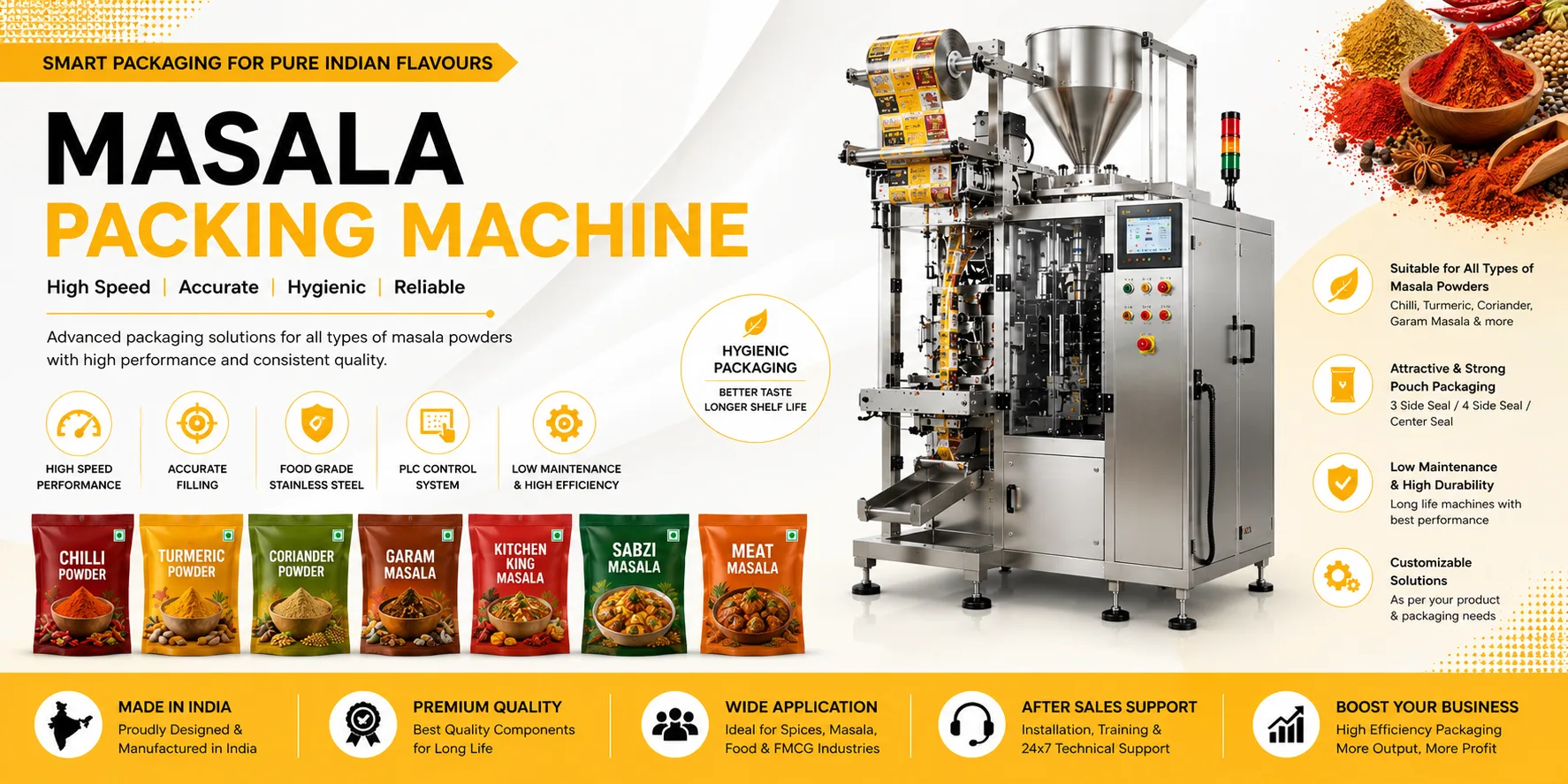
If you've ever watched a batch of fresh ground masala lose its aroma sitting around waiting to be packed, you already know why the right masala packing machine matters. Speed and seal quality aren't just technical specs, they're what stand between your spices reaching the shelf fresh or stale.
Spice packaging isn't like packing snacks or detergent. Masala powders are fine, often slightly oily, and prone to clumping if humidity gets involved. Get the machine wrong, and you'll deal with inconsistent fill weights, leaky seals, or product sticking to the machine's internals. That's why VS PacKit builds machine configurations suited specifically to masala and spice powders, rather than offering one generic VFFS unit for everything.
This guide covers what actually matters when choosing a masala packing machine, from fill accuracy and film selection to FSSAI compliance, and the mistakes that cost spice manufacturers time and product.
Not sure which machine fits your masala line? Talk to our team and get a straight answer.
Why Masala Packing Needs Specialized Machinery
Masala powders behave differently from other dry goods. Their fine particle size means they're prone to dusting, which can clog sealing areas if your machine isn't designed with proper dust control.
Manufacturers who try to use a generic packing machine for spices often run into recurring fill inconsistencies. Spice density varies between batches depending on grind size and moisture content, so a machine without flexible calibration struggles to maintain accuracy.
A study by the Spices Board of India has previously noted that packaging quality directly affects shelf life and aroma retention in ground spices, since exposure to air and moisture accelerates flavor loss. That's not just a technical detail, it's the difference between a satisfied customer and a returned product.
This is where a dedicated masala packing machine earns its place on your production line, rather than treating spice packaging as an afterthought.
What to Look for in a Masala Packing Machine
Before you commit to any automatic masala packing machine, here's what genuinely matters on the factory floor.
Accurate Fill Control
Spice powders need consistent fill weights, and that depends heavily on the filling system paired with your VFFS unit. A mismatch here leads to overfilled or underfilled pouches, which eats into your margins faster than you'd expect.
Dust Management
Look for machines designed with sealed filling chutes and minimal exposure points. This reduces both product wastage and the mess that fine masala powder tends to create around moving parts.
Sealing Consistency
Spice pouches need airtight seals to preserve aroma and prevent moisture ingress. Servo driven sealing systems offer far more consistency here than older mechanical cam based machines.
Speed Without Compromising Accuracy
High speed packaging matters for large scale spice manufacturers, but speed shouldn't come at the cost of fill accuracy. The best machines balance both.
FSSAI Compliance and Food-Grade Parts
Any machine handling spices for retail sale needs contact parts made of food-grade stainless steel, typically SS304, with no crevices where powder can collect and contaminate the next batch. This matters for passing FSSAI audits and for keeping your product safe. Ask your manufacturer whether the hopper, auger, and filling chute are food-grade rated before you buy, not after.
Film and Barrier Selection
The film you run on the machine affects shelf life as much as the machine itself. Laminates like PET or CPP with a metallized or high-barrier layer protect against moisture and oxygen, which is what actually causes masala to lose aroma over time. For premium or aromatic blends, some manufacturers also add nitrogen flushing during the fill cycle to push out oxygen before sealing. Make sure your machine and film choice are compatible before you commit to either.
VS PacKit's Machine Range for Spice and Masala Packaging
What stands out about VS PacKit's range is how clearly each machine is suited to a particular production scale and product behavior.
Komet 81
The Komet 81 is an intermittent motion form and seal bagmaking machine, well suited for masala manufacturers who need reliable, steady output without overcomplicating their packaging line. It's a solid entry point for units scaling up from manual or semi-automatic packing.
GT-5S
The GT-5S is a high-performance vertical form and seal bagmaking machine, built for manufacturers who need higher throughput without sacrificing seal quality. For masala units packaging multiple SKUs across different pouch sizes, this kind of flexibility matters a lot. If your line also handles namkeen alongside spice blends, our Namkeen Packing Machine Buying Guide for Smart Manufacturers covers what to check before choosing a machine for that side of the business.
Komet Sprint
The Komet Sprint is designed for manufacturers prioritizing speed alongside dependable sealing performance, making it a strong fit for spice brands scaling production to meet growing retail demand.
Indus 5000
The Indus 5000 is a cutting-edge intermittent motion bagmaking machine, suited for manufacturers who want a balance of durability and consistent output across long production runs, an important factor when you're running multiple shifts during peak spice season.
Spice Filling Systems
Pairing your VFFS machine with the right spice filling machine, whether that's a servo auger filler or a multihead weigher, makes a noticeable difference in fill accuracy. Auger fillers tend to work especially well with fine, free-flowing masala powders, while multihead weighers suit blended or slightly coarser spice mixes.
Choosing Between These Machines
Here's a simple way to think about it, based on what works well across different production setups:
- Smaller or growing spice units often do well starting with the Komet 81 for its reliability and manageable learning curve.
- Multi-SKU operations benefit from the GT-5S's flexibility across pouch formats.
- High-volume manufacturers chasing speed without compromising seals should look closely at the Komet Sprint.
- Long, continuous production runs are where the Indus 5000 tends to shine.
There's no single best machine here. It genuinely depends on your product mix, batch sizes, and growth plans.
Common Mistakes Spice Manufacturers Make With Packing Machines
- Ignoring particle size variation. Masala blends with different grind consistencies need a machine that can adjust fill calibration easily, not one with rigid settings.
- Underestimating dust buildup. Over time, dust accumulation can affect sealing quality if the machine isn't built with proper containment.
- Choosing speed over seal integrity. A fast machine that produces inconsistent seals will cost you more in returns and complaints than it saves in production time.
- Not testing with your actual spice blend. Always request a live trial run with your specific masala product before finalizing a machine.
- Overlooking batch coding. FSSAI and Legal Metrology rules require batch numbers and date marking on every pouch. Confirm your machine supports inline batch and date coding so traceability isn't an afterthought.
Why Regional Support Matters for Spice Manufacturers
Spice production often runs in seasonal cycles, with demand spiking around festivals and harvest periods. A breakdown during peak season without quick technical support can set you back significantly.
VS PacKit supports manufacturers across Delhi, Noida, Faridabad, Mumbai, Pune, Ahmedabad, Vadodara, Chennai, and Hyderabad... In Faridabad specifically, this includes traditional grain-based products like sattu and atta, read our guides on the Automatic Sattu Packing Machine Manufacturer in Faridabad and Ultimate Guide to Atta Packing Machine Manufacturer for machine options suited to these segments.
Conclusion
A good masala packing machine does more than just fill and seal pouches, it protects the aroma, consistency, and shelf appeal that your spice brand depends on, while keeping you compliant on the food safety side. Whether you're running a smaller operation or scaling toward high-volume production, matching the right machine and film to your specific masala product makes all the difference.
VS PacKit's range, including the Komet 81, GT-5S, Komet Sprint, and Indus 5000, along with compatible spice filling systems, gives manufacturers genuine options suited to different production needs rather than a one-size-fits-all approach.