
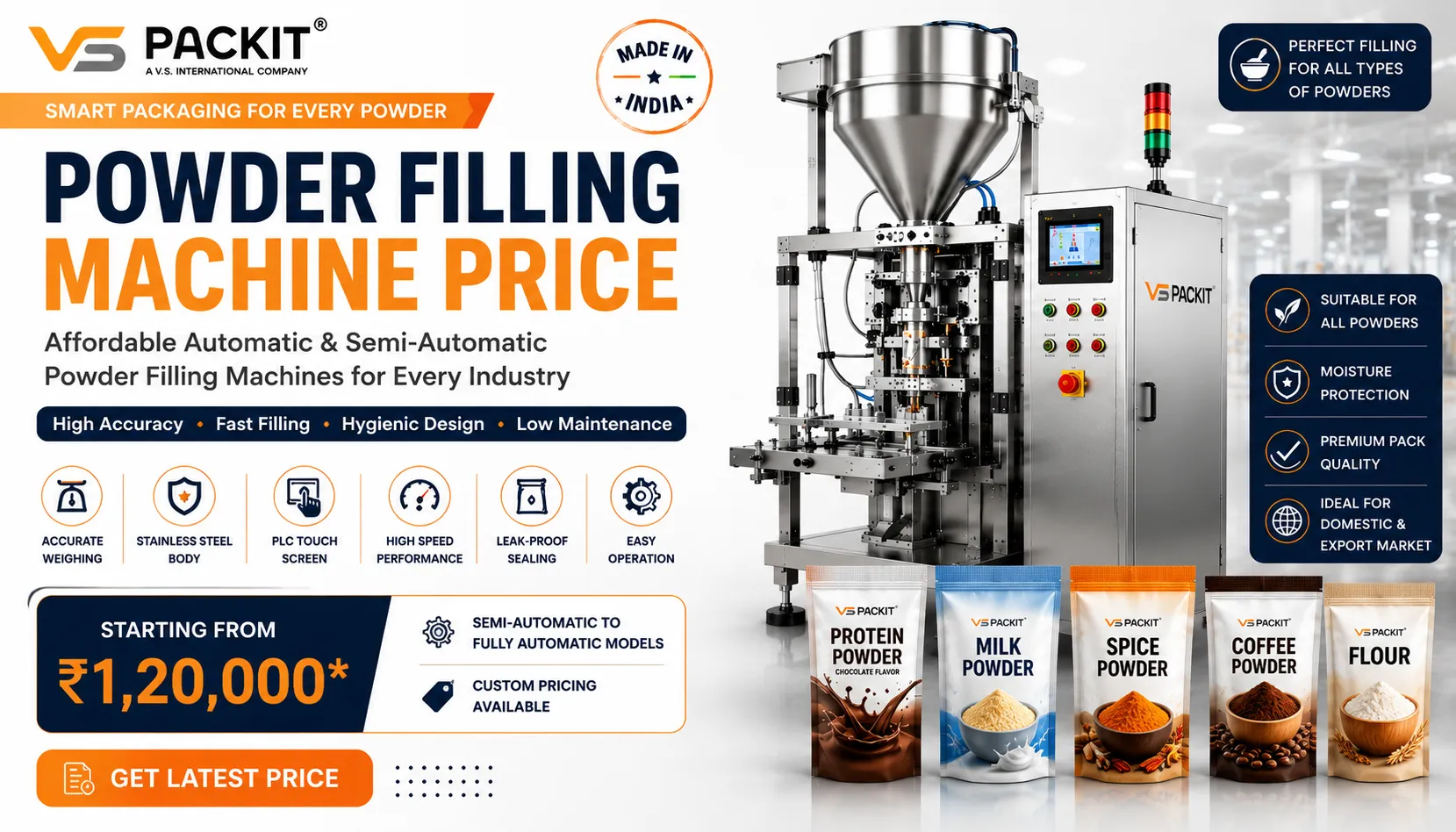
Every buyer eventually asks the same question when shopping for packing equipment: why does one powder filling machine cost a fraction of another that looks almost identical in photos? The honest answer is that price on this kind of equipment is rarely arbitrary. It reflects specific engineering choices, and understanding those choices is the difference between comparing machines on their sticker price alone versus comparing them on actual long-term value.
Having spent considerable time around packing floors, quoting machines, and watching businesses live with their purchase decisions for years afterward, a consistent pattern shows up. Buyers who understand what drives powder filling machine price end up with equipment that actually fits their operation. Buyers who chase the lowest number on a quote often end up paying more later in downtime, rework, or an early upgrade.
This guide breaks down the real factors behind pricing, gives a realistic sense of where different machine types land, and walks through how to think about the purchase without either overpaying or under-buying for your production needs.
Want a price recommendation based on your actual product and volume? Talk to our team and we will help you figure out what makes sense for your line.
What Actually Moves the Price Needle
Before looking at specific numbers, it helps to understand the handful of factors that account for most of the variation between machines on the market.
Dosing technology: This is usually the single biggest driver of cost. Basic volumetric cup fillers sit at the more affordable end, since they measure product by volume rather than weighing it directly. Auger fillers cost more because the screw mechanism and control system needed for accurate, repeatable dosing of fine or cohesive powders is more sophisticated. Weigh cell based systems, which measure each dose directly, sit at the higher end due to the added sensors and calibration involved.
Automation level: Semi-automatic machines, where an operator manually loads containers or pouches and triggers the fill cycle, are considerably cheaper than fully automatic setups that handle container indexing, filling, and sealing with minimal human involvement. The labour savings from full automation are real, but they come with a higher upfront cost that only makes sense once daily volume justifies it.
Speed and throughput: Machines built for higher cycle rates need stronger motors, tighter tolerances, and often servo control rather than simple mechanical timing, all of which push the price up. A machine running 30 packs a minute will almost always cost less than one built to sustain 100 or more.
Accuracy requirements: Tighter weight tolerance, often required for pharma, nutraceutical, or export-grade products, needs more precise dosing hardware and calibration, which adds to the base cost compared to a machine built for looser industrial tolerances.
Build material and construction quality: Food grade stainless steel construction, proper dust containment, and robust frame design all cost more than a machine built with lighter materials or partial mild steel construction, but they pay off in durability and hygiene compliance over the machine's lifetime.
Changeover flexibility: Machines that can handle a wide range of pouch or container sizes without major mechanical rework cost more than those fixed to a single size range, but they save money later if your product line expands.
After sales support and spare parts availability: This one rarely shows up on a spec sheet but affects real world cost significantly. A cheaper machine from a distant or unresponsive supplier can end up costing more in downtime than a slightly pricier machine backed by solid local service.
Realistic Price Ranges by Machine Type
While exact numbers vary by manufacturer, region, and specification, here is a general sense of where different configurations typically land in the Indian market:
- Basic semi-automatic auger or cup fillers: Generally the most accessible entry point, suitable for small businesses or contract packers just automating away from hand filling.
- Mid-range automatic single-head machines: A step up in throughput and consistency, often the sweet spot for growing manufacturers running steady daily volumes.
- Servo-controlled auger systems with fast changeover: Priced higher due to the precision electronics involved, but valuable for operations running multiple SKUs through one line.
- High-speed multi-head weigh fillers: Positioned at the premium end, generally chosen by larger manufacturers where speed and tight accuracy both matter at scale.
- Duplex and multi-lane configurations: Cost more than a single-lane machine of similar technology, but the doubled output often justifies the investment once volume supports it.
Rather than fixating on a single number, it helps to think in terms of cost per pack over the machine's working life, factoring in speed, labour savings, and downtime risk, not just the upfront quote.
How to Evaluate Price Against Actual Value
A few practical steps help buyers avoid the two most common mistakes: overpaying for capacity they do not need, or underbuying and facing an early, costly upgrade.
- Start with your actual daily volume, not your aspirational one. It is tempting to size up for growth you hope happens, but paying for idle capacity for months or years rarely makes financial sense.
- Match the dosing technology to your actual powder, not the other way around. Buying a cheaper volumetric filler for a powder that really needs auger accuracy will cost more in rework and rejected packs than the money saved upfront.
- Ask for a trial run with your own product before committing. Every powder behaves slightly differently, and a demo using a different sample can be misleading about how a machine will actually perform on your line.
- Factor in service response time and spare part availability, not just the machine price. This is often the difference between a two-hour fix and a two-day production stoppage.
- Compare total cost over a few years, not just the invoice. A slightly more expensive machine with better accuracy and less downtime frequently costs less overall than the cheapest option on the table.
If you want a broader look at how filling technology and automation level affect equipment choice beyond just pricing, this guide on powder filling machine walks through the different systems available and how to match them to your product. And if you are specifically comparing options built around whole line configurations for powder, this resource on filling machine for powder covers the practical differences between semi-automatic and fully automatic setups in more depth.
Common Pricing Mistakes to Avoid
A few recurring patterns show up across buyers evaluating powder filling machine price:
- Comparing quotes without comparing specifications closely. Two machines quoted at similar prices can have very different dosing accuracy, speed, and build quality once you look past the number.
- Ignoring installation, training, and commissioning costs. These are sometimes quoted separately and can add a meaningful amount to the total investment if not planned for upfront.
- Underestimating changeover costs for multi-product lines. A cheaper machine that needs manual mechanical adjustment for every product switch can cost more in lost production time than a pricier servo controlled alternative.
- Overlooking warranty terms and what they actually cover. Warranty length matters less than what components and labour are actually included, so read the fine print rather than assuming all warranties are equal.
- Choosing based on the lowest quote alone. The cheapest machine on the table is sometimes genuinely the right choice, but it should be a decision made after comparing accuracy, build quality, and support, not the very first filter applied.
Final Thoughts
Powder filling machine price is shaped by dosing technology, automation level, speed, accuracy requirements, build quality, and after sales support, not by brand recognition or how advanced a machine looks in a brochure photo. The smartest approach is to size the investment to your actual current volume and product requirements, request a trial run with your own powder, and weigh total cost of ownership rather than just the upfront number.
Not sure what a realistic budget looks like for your specific powder and production target? Get in touch with our team and we can help you work out a configuration that fits both your product and your budget.