
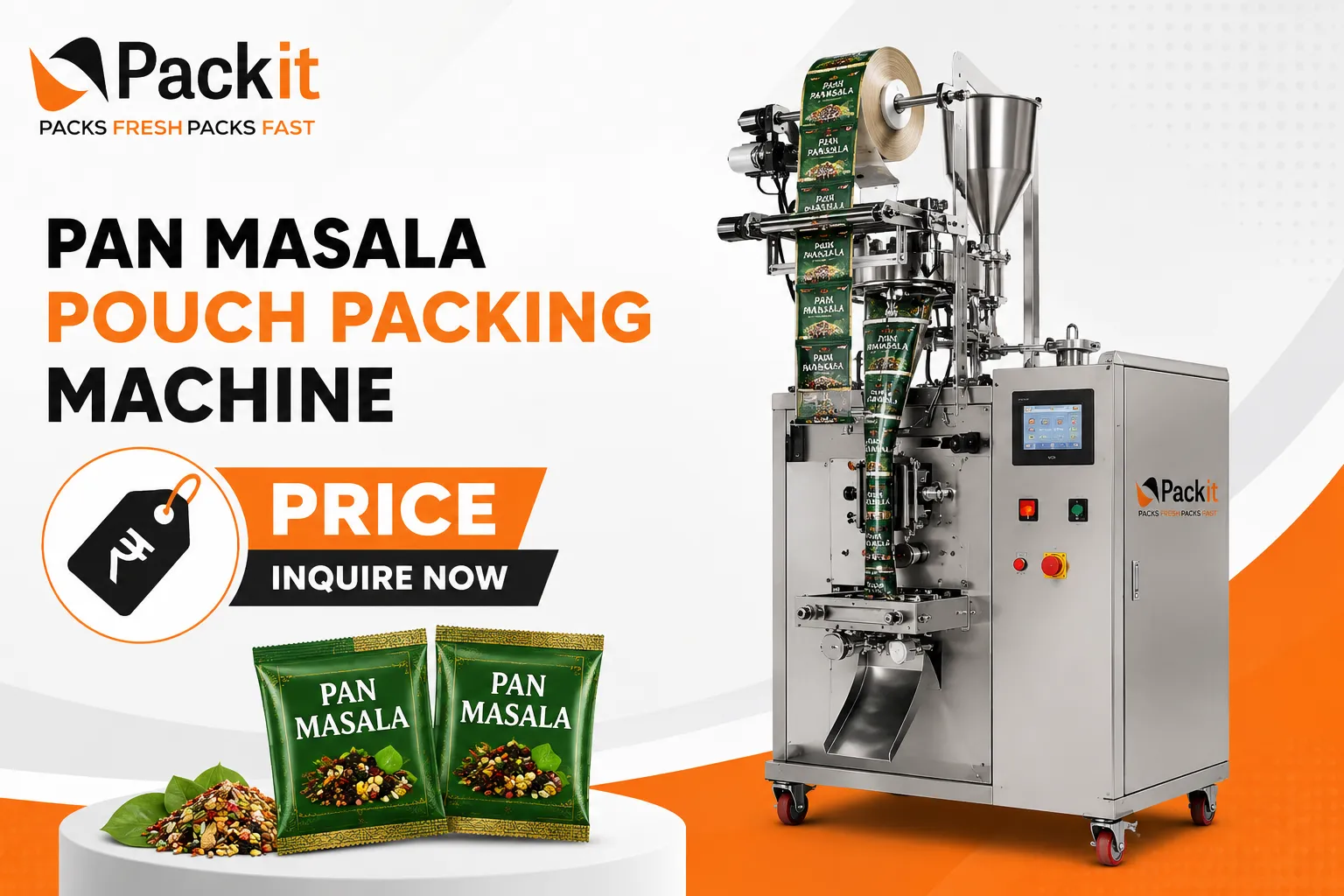
If you are planning to start a pan masala business or upgrade your existing packing line, one of the first questions on your mind is probably the price. It makes sense. A packing machine is a big investment, and you want to know exactly what you are paying for before you commit.
The truth is, there is no single fixed price for a pan masala pouch packing machine. The cost depends on several things like the pouch size, the speed you need, the level of automation, and the brand you choose. In this guide, we will break down everything that affects pricing so you can make a decision that actually fits your business, not just your budget.
If you already know roughly what you need and just want a quote, you can send an enquiry here and our team will get back to you with the right machine and price for your production requirement.
Why Pan Masala Needs a Special Kind of Packing Machine
Pan masala is not like every other product you can pack. It is a fine, dry powder mixed with small granules, and it often contains flavoring oils that can make the mix slightly sticky. This creates a few packing challenges that a regular machine may not handle well:
- The powder can clog the filling area if the machine is not designed for fine, free flowing products
- Accurate weight filling is critical because even small variations add up across thousands of pouches
- The seal needs to be strong and airtight so the aroma and freshness stay locked in
- High speed production is often needed since pan masala is usually sold in small, low cost sachets
Because of this, most pan masala manufacturers use a dedicated pouch packing machine or sachet packaging machine that is built specifically for powders and granules, rather than a general purpose packing machine.
What Affects the Pan Masala Pouch Packing Machine Price
When you start comparing pan masala packing machine price across different sellers, you will notice a wide range. Here is what actually drives that difference.
1. Type of Machine
There are different categories of pouch packing machines, and each comes at a different price point:
- Semi-automatic machines: These need some manual handling, like placing the pouch or triggering the filling manually. They are cheaper and suit small businesses or those just starting out.
- Fully automatic machines: These handle everything from film feeding to filling, sealing, and cutting without manual intervention. They cost more but save on labor and give much higher output.
2. Production Speed
Speed is one of the biggest price factors. A machine that produces 30 to 40 pouches per minute will cost less than one that can produce 100 or more pouches per minute. If you are running a large scale pan masala unit, you will want higher speed, which naturally increases the price.
3. Pouch Size and Type
Whether you are packing small 2 gram sachets or larger 50 gram pouches makes a difference in machine design. Machines that can handle multiple pouch sizes, or different pouch styles like pillow pouches or gusseted pouches, tend to be priced higher than machines built for a single fixed size.
4. Filling Mechanism
Pan masala packing machines usually use volumetric cup fillers or auger fillers for accurate dosing. Auger fillers, which are more precise for fine powders, generally add to the cost compared to simple cup filling systems.
5. Build Quality and Automation Features
Machines with stainless steel construction, PLC based controls, touch screen interfaces, servo motors, and automatic pouch coding tend to be priced higher. These features improve accuracy, reduce wastage, and cut down on downtime, so while they raise the upfront price, they often pay for themselves over time.
6. Brand and After Sales Support
Established manufacturers with a proven track record, spare parts availability, and strong after sales service usually charge a bit more than unbranded or lesser known suppliers. This is usually worth it, since breakdowns in a low cost machine with poor support can cost you far more in lost production time.
Typical Price Range for Pan Masala Pouch Packing Machines
While exact pricing depends on your specifications, here is a general idea of where different machine types fall:
- Entry level semi-automatic machines: Suitable for small businesses with lower daily output requirements
- Mid range automatic machines: Ideal for growing businesses that need consistent daily production with better accuracy
- High speed fully automatic machines: Built for large scale manufacturers who need maximum output with minimal manual involvement
Rather than going by a general price list, it is always better to share your daily production target, pouch size, and packing material with the manufacturer so they can quote a price that matches your actual needs. You can always send your requirement here to get a quote tailored to your business.
Popular Machines Worth Considering
If you are exploring options, two machines that are commonly used for pan masala and similar powder products are the GT-5S and the Komet Sprint. Both are designed to handle fine powder products with accurate filling and strong sealing, and they cater to different production scales, so it is worth comparing their specifications against your daily output needs before making a decision.
If your requirement is more specific to small sachets, you may also want to look at a dedicated sachet packaging machine, which is built for exactly this kind of low gram, high speed packing.
Buying Tips: How to Avoid Overpaying or Underbuying
A lot of buyers either overspend on features they don't need, or underspend and end up with a machine that cannot keep up with demand. Here are a few tips to get the balance right:
- Know your daily output target before you shop. This single number decides whether you need a semi-automatic or fully automatic machine.
- Don't ignore after sales service. A slightly higher price with good service and spare parts support is usually a better deal in the long run.
- Ask about material compatibility. Make sure the machine works well with the packaging film you plan to use for your pan masala pouches.
- Check for scalability. If you expect to grow, ask if the machine can be upgraded or if a higher capacity model is available from the same manufacturer.
- Compare more than one supplier. Pricing and quality can vary a lot, so it helps to get quotes from a couple of manufacturers before deciding.
We have covered these buying decisions in more depth in two of our blog posts, which you may find useful if you want to go deeper before making a purchase: How to Choose an Automatic Pouch Packing Machine the Right Way and How to Choose a Pouch Packing Machine You Will Not Regret Buying.
Why Choose a Dedicated Manufacturer
Working directly with a pouch packing machine manufacturer rather than a trader or reseller usually gives you better pricing, faster support, and machines that are actually customized to your product rather than a generic setup. Since pan masala has its own packing challenges, this matters more than it might seem at first.
A good manufacturer will also walk you through machine trials, help you understand the ideal packaging film for your product, and guide you on maintenance so your machine runs smoothly for years rather than breaking down within months.
Conclusion
The pan masala pouch packing machine price depends on your production speed, pouch size, automation level, and the manufacturer you choose. Instead of chasing the lowest number, it is worth thinking about total value, including accuracy, durability, and support, since these are what actually keep your production line running day after day.
If you are ready to move forward, or even if you just have a few questions about which machine suits your business, you can send an enquiry here and our team will help you find the right fit at the right price.